See The Threats Targeting Your Domains and Infrastructure
Monitor how your domains are being abused, where threats originate, and where your own infrastructure may be exposed, all in one place.
Threat Intelligence helps you detect spoofing attacks, uncover lookalike domains, and identify vulnerabilities across your own infrastructure so you can understand your attack surface and act before threats impact your business.
No credit card required
You can’t protect what you can’t see
Your domains and email infrastructure can be targeted, impersonated, or exposed in ways that are easy to miss.
Your domain appears in malicious activity originating from infrastructures you don’t control.
You cannot see the infrastructure behind these attacks.
Your brand is being impersonated through lookalike domains.
Your own infrastructure may give attackers a way in.
See the threats. Know where they come from. Act before they become a problem.
Threat Intelligence brings visibility across the attacks targeting your domains and the weaknesses exposed in your own mail infrastructure, helping you understand what’s happening, where risk is building, and what to act on first.
Monitor the attacks targeting your domains
Identify active spoofing campaigns targeting your domains and understand how your domains are being abused.
See active spoofing campaigns
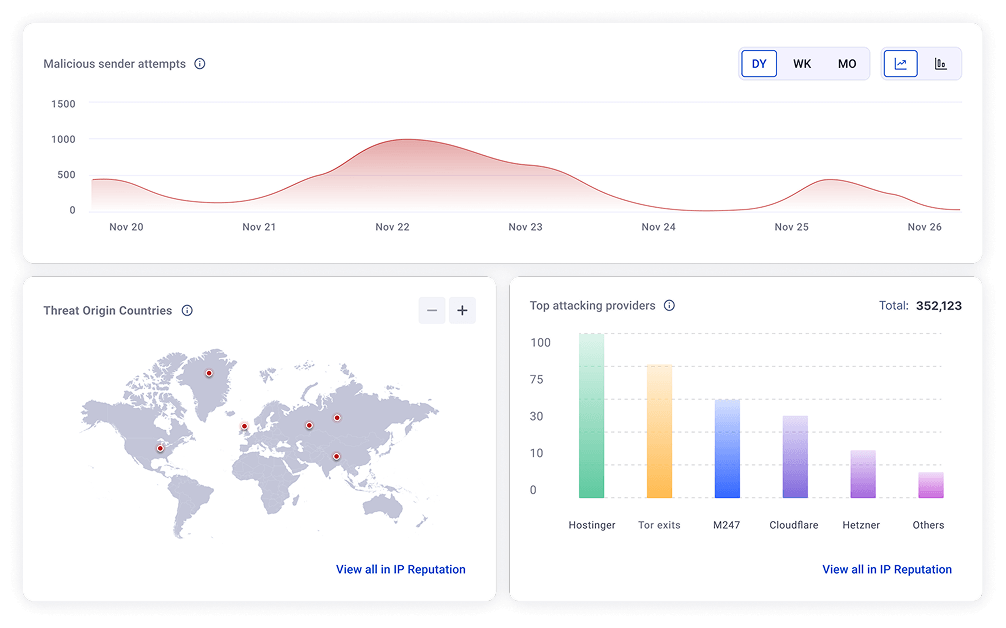
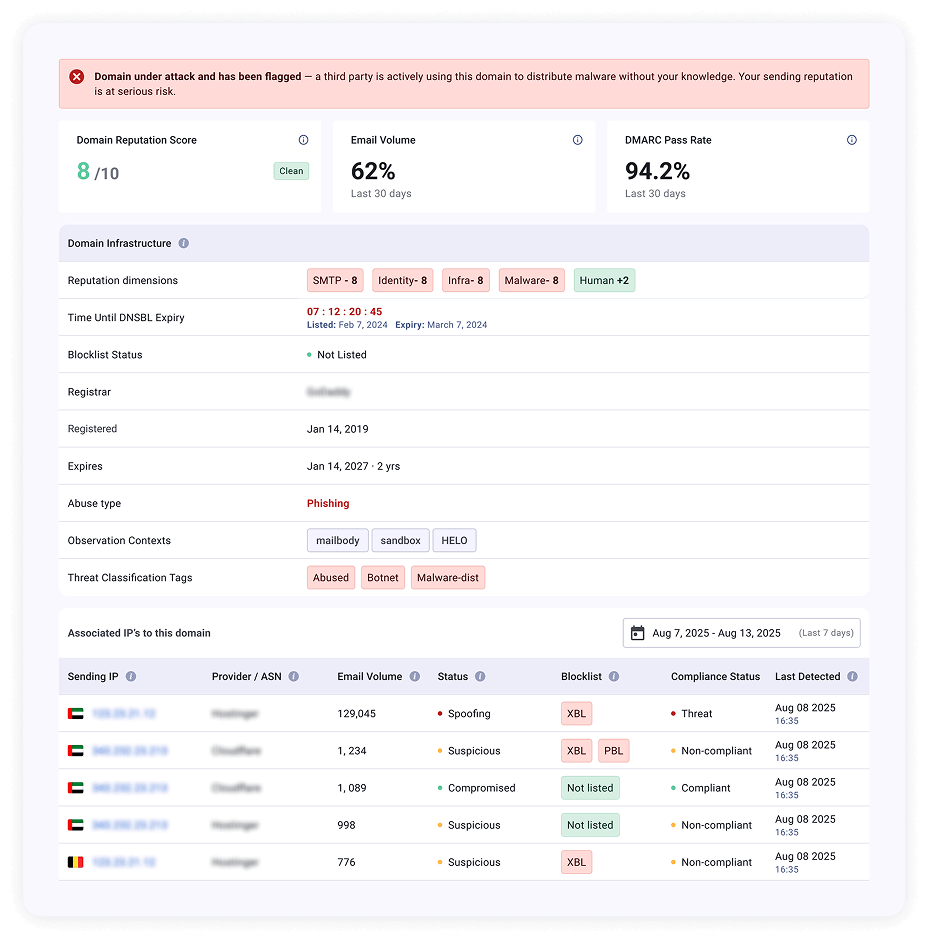
Detect malicious senders actively using your domain identity and see the scale of spoofing activity across your domain portfolio. Track which domains are being targeted and how threat activity evolves over time.
See the infrastructure behind the attacks
Trace spoofing activity to the external infrastructure sending emails on your behalf. See the IPs involved, where they are originating from, and the infrastructure associated with active campaigns.
Find lookalike domains built to impersonate your brand
Discover domains designed to look like yours and identify which ones are being registered, used, or prepared for impersonation.
Discover and monitor lookalikes
Identify lookalike variants across your portfolio, then monitor them for registration and activity. See which variants are active, parked, or unregistered, including early-warning domains that have been registered but aren’t active yet.
Assess every variant at a glance
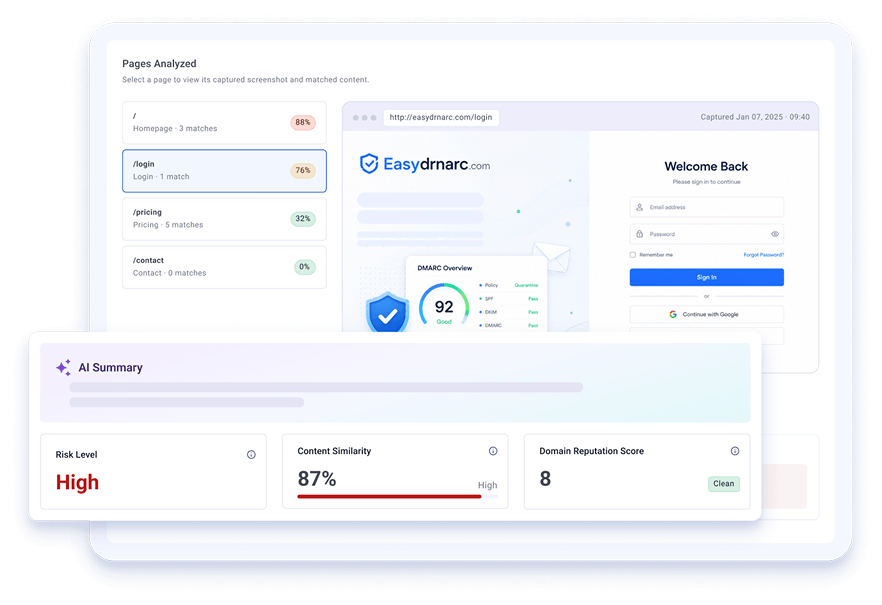
See the risk level and content similarity for each variant, alongside indicators for mail records, DNS, live website status, detection type, website URL, and registration date.
Build evidence and take action
Track changes over time, capture the evidence behind a threat, and get step-by-step takedown guidance when a lookalike requires action.
What changes for your team
Move from Reactive to Proactive Security
Monitor the attacks targeting your domains and understand how your domains are being abused as threats emerge.
See threats earlier
Identify spoofing, brand impersonation, and infrastructure exposure before they become larger security problems.
Know what’s behind the risk
Connect suspicious activity to the domains, infrastructure, and threats behind it instead of investigating from disconnected signals.
Prioritize what needs attention
Focus your response on active threats and high-risk findings backed by evidence.
See your infrastructure through an attacker’s eyes
Identify exposed services, vulnerable software, and other weaknesses across your dedicated mail-serving infrastructure before attackers find them.
Threat Intelligence adds the threat layer to your email infrastructure
Threat Intelligence shows what is happening around your email infrastructure, connecting threats, abuse, and malicious activity with the infrastructure, authentication, and sending context across the platform.


DNS Manager
DNS and infrastructure provide the foundation for your email environment. Threat Intelligence uses that context to connect threats and malicious activity to the domains and infrastructure they affect.

Authentication
While Authentication establishes which systems are authorized to send on behalf of your domains, Threat Intelligence shows what happens beyond that boundary, including unauthorized senders, spoofing activity, and malicious campaigns targeting your domains.

Sender Insights
Sender Insights shows what is happening across your sending environment and how sending behavior affects trust and performance. Malicious activity and unauthorized senders using your domains can affect your domain reputation and contribute to deliverability issues. Threat Intelligence helps surface this activity and where it originates.
Built on years of visibility into the infrastructure behind business email
9B
daily signals
90,000+
organizations
8+ years
of email infrastructure data
What does email threat intelligence monitor?
EasyDMARC Threat Intelligence monitors threats and exposure around business email infrastructure, including spoofing activity, malicious sending infrastructure, lookalike domains, domain impersonation, and vulnerabilities across dedicated mail-serving infrastructure.
How does Threat Intelligence help with brand impersonation protection?
Threat Intelligence identifies lookalike domains designed to resemble your brand, tracks their registration and activity, compares content and technical signals, and helps teams build evidence and prioritize action when a domain poses a credible impersonation risk.
How does lookalike domain monitoring work?
EasyDMARC monitors domain variants across your portfolio and shows whether they are active, parked, unregistered, or newly registered. Teams can review risk level, content similarity, DNS and mail records, website status, registration details, and changes over time.
How does Threat Intelligence help investigate domain impersonation?
Threat Intelligence connects suspicious lookalike domains with the evidence behind them, including registration activity, website behavior, mail records, DNS signals, and content similarity, so teams can distinguish higher-risk impersonation attempts from lower-risk variants.
How does Threat Intelligence help investigate domain spoofing?
Threat Intelligence surfaces active spoofing activity using your domain identity and traces that activity to the external IPs and infrastructure behind it. This helps teams understand which domains are being targeted, where malicious sending originates, and how activity changes over time.