DNS Manager for Full Control of Every Zone, Record, and Change
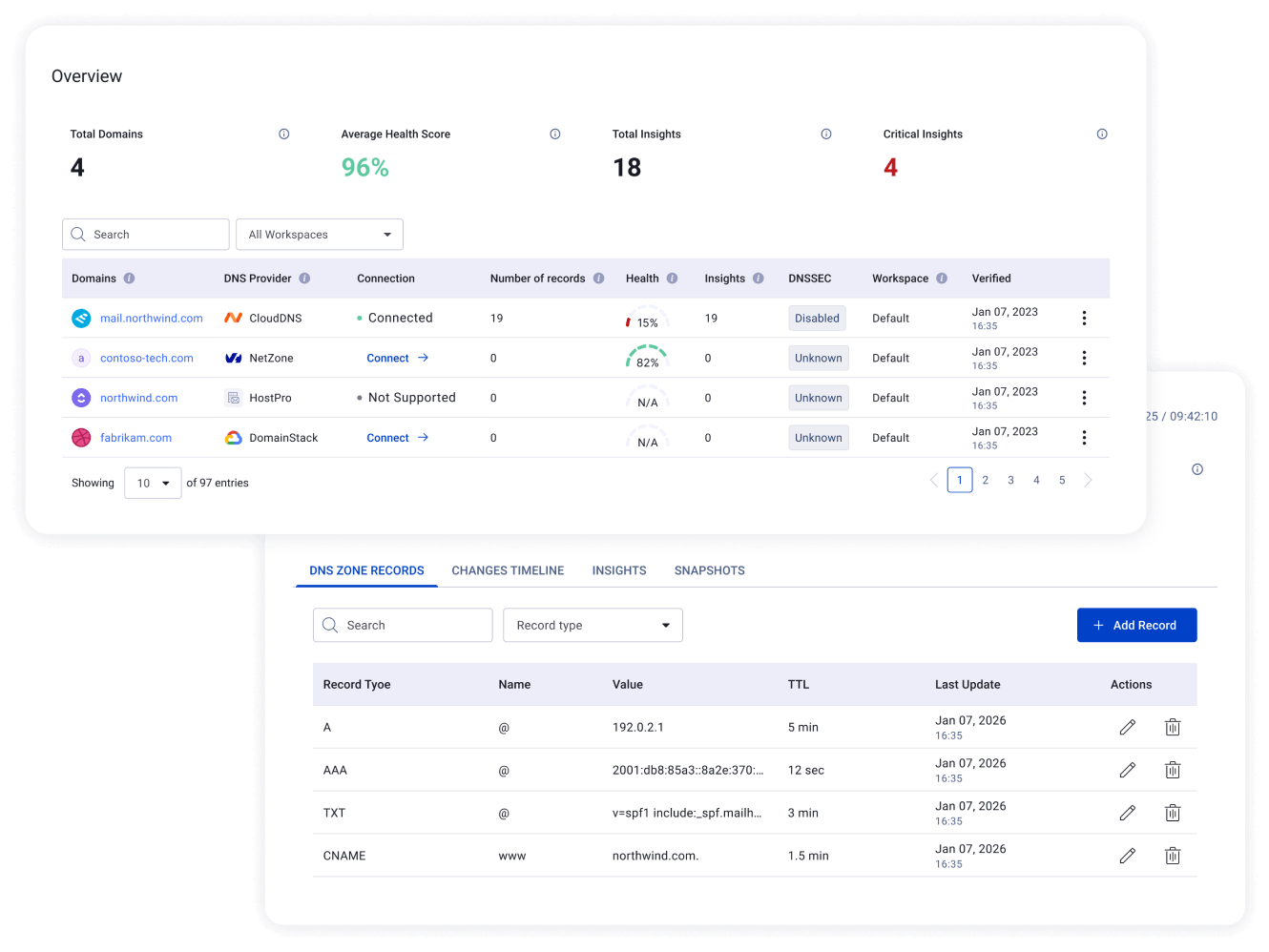
EasyDMARC DNS Manager is DNS management software that gives teams one intelligent control layer across their DNS environment, continuously surfacing DNS configuration, security, and email-authentication risk.
- Centralized DNS management across providers, with zones and records operated from one place.
- Validate changes before production, keep the live state visible, and recover quickly when something goes wrong.
- Govern every DNS change with versioning, audit history, rollback, and verification.
14-day free trial · No credit card required
Built on years of visibility into the infrastructure behind business email
DNS became critical infrastructure, but the way teams manage it has not kept up.
Modern DNS management spans domains, providers, teams, applications, email systems, and security controls. As that environment grows, it becomes harder to know the live state, make changes safely, and recover quickly when something goes wrong.
01 · DNS spreads
More domains, providers, teams, and services
The DNS estate expands across systems that were never designed to be operated as one environment.
02 · Change continues
Records, providers, applications, and controls keep changing
Every new service, migration, sender, or security control can alter the live DNS state.
03 · Control gets harder
The current state becomes harder to understand and protect
Validation, change context, ownership, and recovery can break down across provider boundaries.
04 · Business impact
DNS problems reach the business
Outages, security gaps, authentication failures, delivery problems, and deliverability issues.
What is actually deployed?
Zones and records live across provider interfaces, making it harder to understand the current DNS state across the portfolio.
What happens if this record changes?
Critical updates can reach production without consistent validation, clear context, or a recovery path if something goes wrong.
Was DNS actually the cause?
The visible symptom can appear as an outage, authentication failure, rejection, or another downstream issue before DNS is identified as the source.
DNS should not be a record-by-record task. It should be a continuously controlled system.
Every change should be validated before production, attributable when applied, verified afterward, and reversible if something goes wrong.

Validate
Check the proposed update for conflicts, syntax, security, authentication, and service impact before production.

Apply with control
Keep ownership, approval, previous values, and change history attached to the update.

Verify and recover
Confirm propagation and the resulting state, with versioning, rollback, and snapshots available when needed.
Observe. Assess. Control.
EasyDMARC DNS Manager is DNS management software that gives Security and IT one operating model for understanding the live DNS state, deciding what needs attention, and making governed changes across providers.
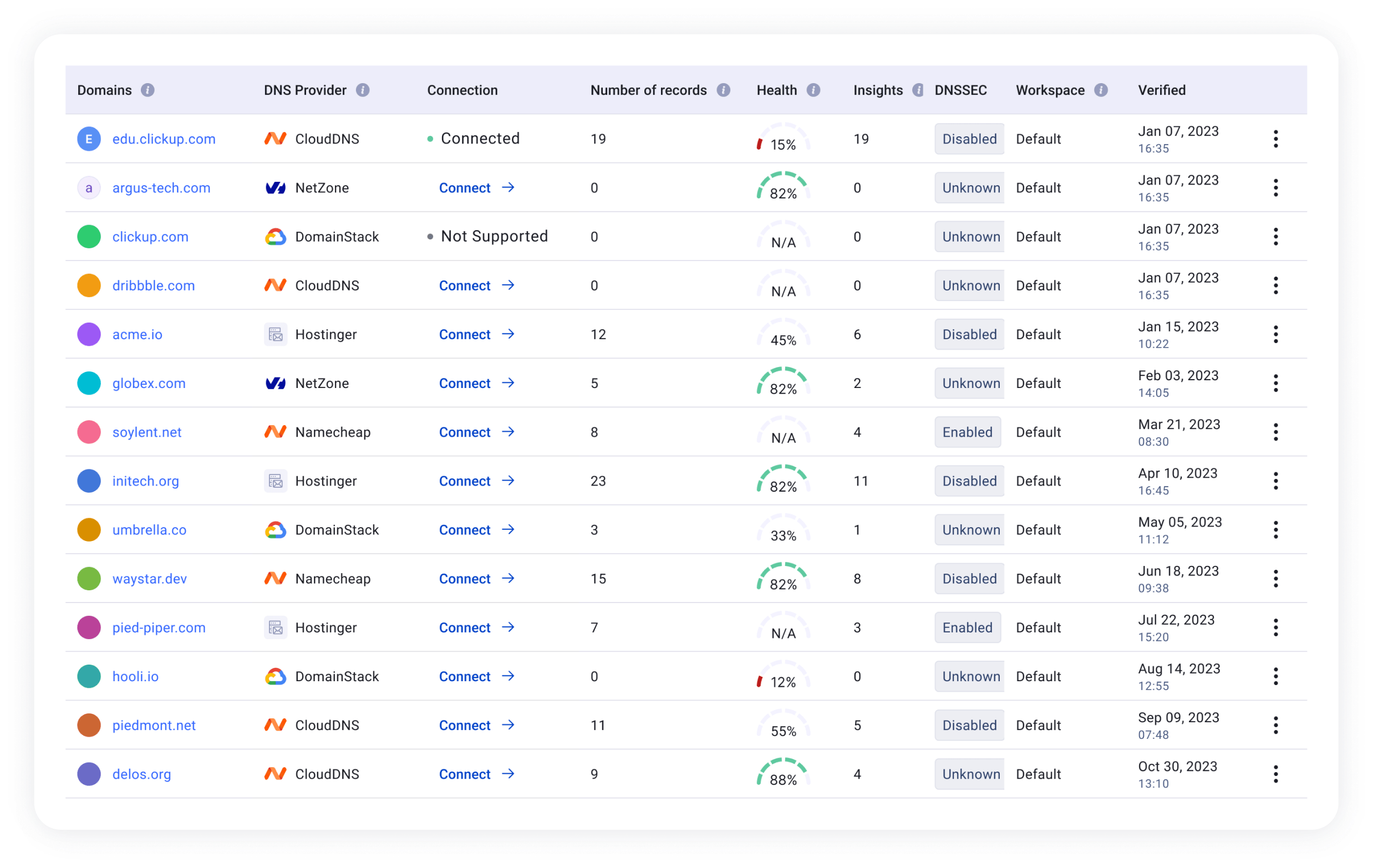
See the DNS state across your entire infrastructure
Bring DNS monitoring, zones, records, providers, propagation, health, authentication records, and recent changes into one operating view.
- See zones and records across connected DNS providers.
- Track propagation and infrastructure health across the portfolio.
- See DNSSEC, MX, SPF, DKIM, DMARC, and related records in context.
- Surface meaningful changes without checking provider portals one by one.
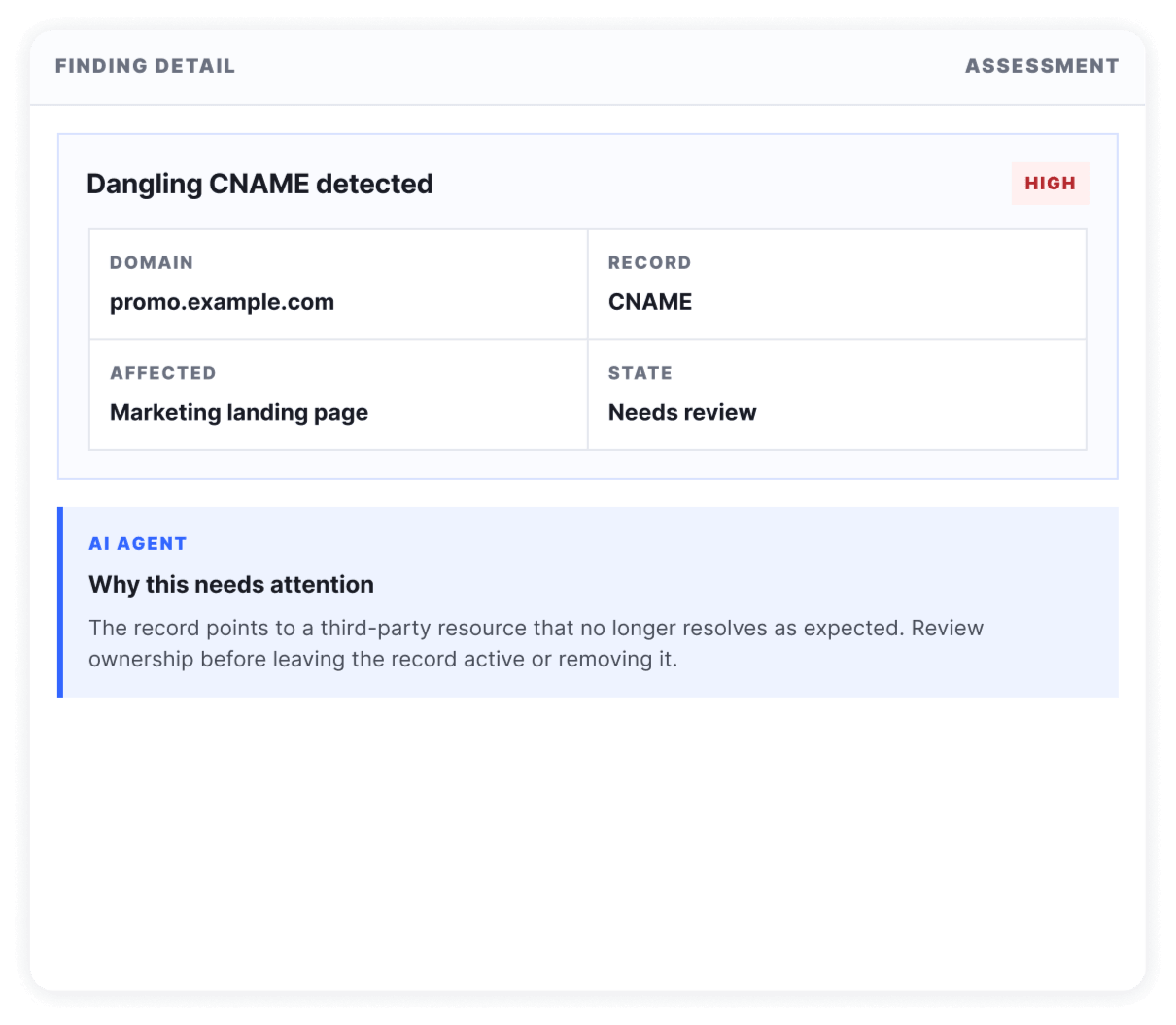
Know Which DNS Changes Are Safe, Risky, or Already Causing Impact.
Use the live DNS state and proposed changes to understand what needs attention before the team starts troubleshooting.
- Validate proposed DNS changes before they reach production.
- Catch syntax errors, conflicts, dangling records, and configuration drift.
- Identify DNSSEC, authentication, certificate-policy, and DNS hygiene issues.
- See the service, security control, or email path a finding can affect.
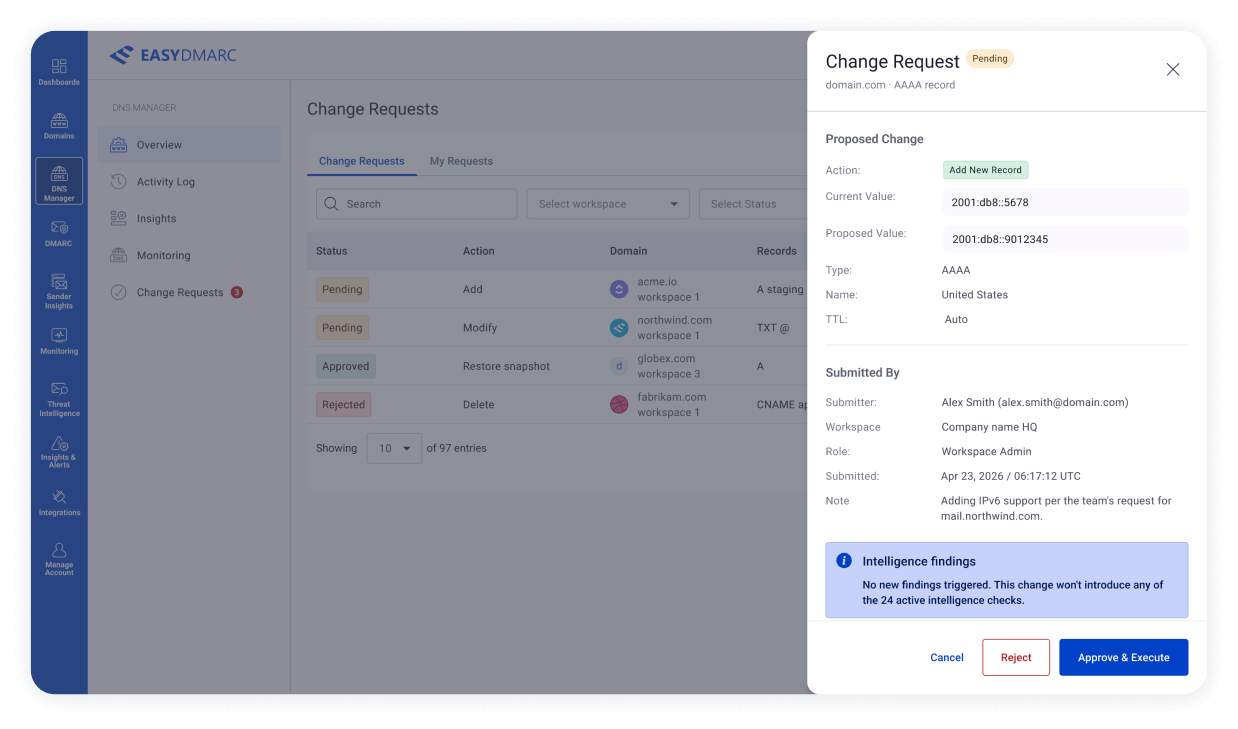
Make the Change Without Losing Control.
Move from finding to action while keeping every update attributable, reversible, and verifiable.
- Apply DNS updates from one control layer across connected providers.
- Keep a complete before-and-after change history.
- Use per-record versioning, rollback, and zone snapshots for recovery.
- Delegate work with role-based access, validation, and guardrails.
- Verify propagation and the resulting state after the change.
Operate DNS Across the Full Lifecycle.
For teams evaluating DNS management software, multi-provider visibility, validation, governance, and recovery come together in one DNS operating layer.
See the full DNS state
VISIBILITY
- Unified Zone ManagementCentralize DNS record management across providers from one interface.
- Portfolio HealthPrioritize issues across the domain estate.
- Global PropagationVerify how changes resolve across geographies.
Catch problems before and after change
VALIDATION & RISK
- Continuous DNS AnalysisInspect the live state for operational, security, and email-authentication risk.
- Pre-Change ValidationCheck proposed updates before production.
- DNS + Authentication ChecksEvaluate infrastructure and email controls together where DNS is involved.
Control how DNS changes
GOVERNANCE
- Change Timeline & Audit TrailSee who changed what and when.
- Controlled DelegationGive teams access without removing safeguards.
- DNSSEC ActivationGuide DNSSEC changes with validation.
Keep a clear path back
RECOVERY
- Per-Record VersioningRetain previous DNS states.
- RollbackRestore a previous value when needed.
- Zone SnapshotsCreate recovery points around major changes.

Control
Full DNS control across providers
See and manage the DNS state across domains from one operating layer instead of separate provider portals.
Every change stays governed
Keep updates attributable, versioned, reversible, and verifiable across teams and environments.

Risk
Catch DNS risk before it becomes business impact
Validate proposed changes and continuously inspect the live state for infrastructure, security, and authentication issues.
See when DNS can affect email
Surface DNS conditions that may contribute to authentication failures, routing problems, rejections, deferrals, or spam placement.

Operations
Find the DNS cause behind symptoms faster
Connect recent DNS changes and configuration findings to the infrastructure or email behavior they may be affecting.
Recover without rebuilding the state manually
Use change history, versioning, rollback, and snapshots to return to a known-good configuration.
DNS Manager Provides the Infrastructure Context Behind Email Trust.
When DNS changes, the rest of the platform can use that infrastructure context to understand whether authentication, legitimate sending, or domain security may also be affected.


Know what changed underneath SPF, DKIM, and DMARC.
See the DNS state and change history behind authentication records so teams can investigate failures with the infrastructure context already available.
Explore Authentication

Check whether DNS or authentication changes are contributing to a sending problem.
Use recent DNS state and changes as one source of evidence when investigating delivery, rejection, or sender-health issues.
Explore Sender Insights

Control DNS remediation when external risk requires an infrastructure change.
When a security finding calls for a DNS update, manage that change with validation, governance, history, and recovery in the same control layer.
Explore Threat Intelligence
What is a DNS Manager and how does centralized DNS management work?
A DNS Manager gives teams one place to manage DNS zones and records across supported providers. EasyDMARC adds centralized visibility and control, live-state visibility, validation, governance, change history, rollback, and recovery without replacing the underlying DNS provider.
Does EasyDMARC provide DNS monitoring and DNS health monitoring?
Yes. EasyDMARC keeps the live DNS configuration visible across connected domains and providers, including record state, recent changes, propagation, DNSSEC, authentication-related records, and issues that need attention.
Can DNS Manager detect DNS misconfiguration and configuration drift?
Yes. DNS Manager can surface DNS configuration issues such as syntax errors, conflicts, dangling records, authentication problems, and configuration drift so teams can review DNS issues before they become wider operational or security problems.
Can I track DNS change history and audit DNS changes?
Yes. DNS change history and audit data show what changed, when it changed, and who made the update. Versioning and before-and-after state help teams investigate incidents and maintain stronger DNS change management.
Can I check DNS propagation and DNS TTL after making a change?
Yes. DNS propagation monitoring helps teams verify how a DNS record resolves after a change. TTL, or DNS time to live, influences how long cached DNS data can remain before resolvers refresh it.
Which DNS record types can I manage and monitor?
DNS Manager is designed for DNS record management across common record types including A, AAAA, CNAME, MX, TXT, NS, SOA, SRV, CAA, and email-authentication records such as SPF, DKIM, and DMARC where supported.
How does DNSSEC fit into DNS security?
DNSSEC helps protect DNS responses from tampering by adding cryptographic validation. DNS Manager can surface DNSSEC state and support governed DNSSEC changes as part of a broader DNS security and configuration workflow.
Can I back up, version, roll back, or restore DNS records?
Yes. DNS backup and recovery capabilities include per-record versioning, DNS change history, rollback, and zone snapshots so teams can return to a known-good DNS state when needed.
Can DNS issues affect MX records, email delivery, and deliverability?
Yes. DNS is used for MX records, mail routing, SPF, DKIM, DMARC, and other email controls. DNS issues can contribute to routing failures, authentication failures, rejections, deferrals, or spam placement, although DNS is only one of many factors that influence deliverability.
Is EasyDMARC DNS Manager software different from DNS management services?
Yes. EasyDMARC DNS Manager is DNS management software that helps teams centralize visibility, validation, governance, versioning, and rollback across supported DNS providers. Organizations comparing DNS management services can use the platform to manage these operations internally, while the underlying DNS providers remain in place.