
Email security requirements are getting stricter every year. Major mailbox providers such as Gmail and Yahoo now require domains to properly authenticate email to prevent spoofing and phishing. Without the right setup, even legitimate emails can end up in spam or be rejected outright. This is why many businesses rely on a trusted DMARC provider to manage authentication policies, monitor domain activity, and safely move toward enforcement.
A reliable platform also provides organizations with clear visibility into who is sending emails on their behalf, helping them quickly detect unauthorized use. Choosing the right DMARC service in 2026 is no longer optional. It has become an essential part of protecting brand reputation, customer trust, and email deliverability.
What is a DMARC Provider?
A DMARC provider is a company or platform that helps organizations implement and manage email authentication protocols- SPF, DKIM, and DMARC. It simplifies complex setups while also managing monitoring, reporting, and policy enforcement from a central dashboard.
Most companies offering enterprise DMARC solutions provide automated record hosting, detailed aggregate and forensic reports, domain and sender monitoring, and guided enforcement tools that help organizations transition safely from monitoring mode to full protection.
Must-Have Features Offered by DMARC Vendors
Choosing the right DMARC vendor is not just about generating records. The real value comes from visibility, automation, and scalability. A strong platform should make it easy to monitor authentication activity, detect threats early, and move safely toward enforcement without disrupting legitimate email traffic. Here are the most important features to evaluate when selecting one for yourself:
Real-Time Reporting Dashboards
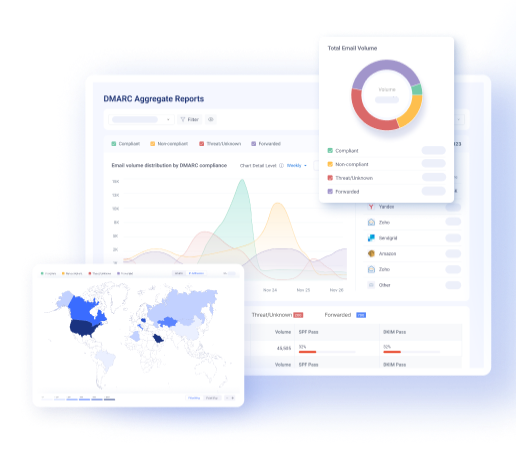
A reliable platform should provide clear, real-time dashboards that convert complex XML reports into easy-to-understand charts and summaries. These dashboards help organizations quickly see which sources are sending emails from their domain, whether authentication checks pass, and where potential threats originate. Faster visibility means faster response to spoofing attempts.
SPF and DKIM Alignment Monitoring
DMARC relies heavily on SPF and DKIM alignment, so continuous monitoring is essential. A strong platform should automatically detect alignment failures, highlight misconfigured senders, and provide clear recommendations to fix issues. This reduces the risk of legitimate emails failing authentication and prevents unauthorized senders from using your domain.
Automated Enforcement Rollout
Moving from monitoring mode (p=none) to enforcement (quarantine or reject) can be risky if done manually. The best DMARC software provides guided or automated enforcement rollout tools that analyze authentication data, identify trusted senders, and recommend safe policy changes. This minimizes disruption while improving domain protection over time.
Threat Intelligence and Domain Discovery
Advanced DMARC service providers include domain discovery features that identify domains similar to yours that could be used for phishing attacks. Some platforms also integrate threat intelligence feeds to detect suspicious sending patterns and highlight potential spoofing campaigns. This proactive approach helps organizations stop threats before they reach customers.
Enterprise Integrations
For large organizations, integration capabilities are critical. A scalable DMARC provider should integrate with SIEM platforms, security orchestration tools, ticketing systems, and email security gateways. These integrations allow teams to automate alerts, streamline investigations, and include DMARC insights within broader security workflows.
Multi-Domain and Multi-Tenant Management
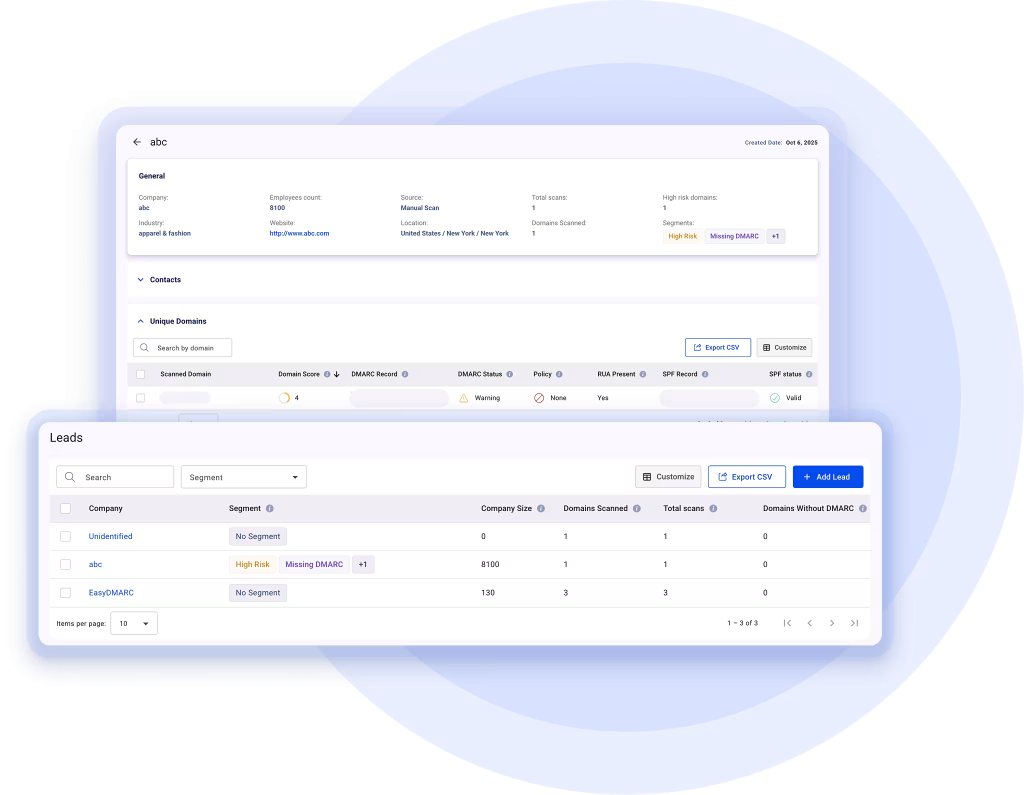
Enterprises, managed service providers, and global brands often manage dozens or even hundreds of domains. A reliable DMARC solution should support centralized multi-domain management, role-based access control, and multi-tenant environments. This makes it easier to manage policies, reports, and enforcement strategies across multiple business units or client environments from a single platform.
How Enterprise DMARC Vendors Were Evaluated
Vendors in this guide were evaluated using the following criteria:
- Multi-domain scalability: Ability to manage many domains and subdomains from one platform.
- Audit logging and compliance support: Availability of activity logs that help organizations meet security and compliance requirements.
- Integration ecosystem: Compatibility with tools such as SIEM systems, SSO platforms, DNS providers, and APIs.
- Enterprise support model: Access to onboarding assistance, technical guidance, and enterprise-level support.
- Reporting depth: Clear reports that show authentication performance, sending sources, and potential risks.
- Deployment flexibility: Ease of setup and the ability to support different infrastructure environments and organizational needs.
Best DMARC Providers in 2026
The following vendors are presented based on publicly available enterprise features, deployment capabilities, and DMARC management functionality.
1. EasyDMARC
EasyDMARC is a widely used DMARC service that helps organizations manage email authentication across multiple domains from a single platform. Designed for both mid-sized companies and large enterprises, the platform focuses on simplifying complex DMARC deployment processes through automation, centralized reporting, and expert-assisted implementation.
Its unified dashboard allows teams to monitor authentication performance, detect unauthorized senders, and gradually move toward full policy enforcement without disrupting legitimate email flows. With built-in tools for SPF, DKIM, and DNS management, EasyDMARC provides tools designed to support long-term email authentication management and deliverability monitoring.
Key capabilities of the EasyDMARC platform include:
Managed Authentication Services
EasyDMARC provides end-to-end support for configuring DMARC, SPF, DKIM, and BIMI records, along with ongoing monitoring and periodic security reviews to maintain authentication accuracy across all domains.
Advanced Reporting and Insights
The platform converts complex DMARC aggregate and forensic data into easy visual dashboards, helping teams quickly identify alignment issues, suspicious activity, and authentication trends.
Automation and Real-Time Alerts
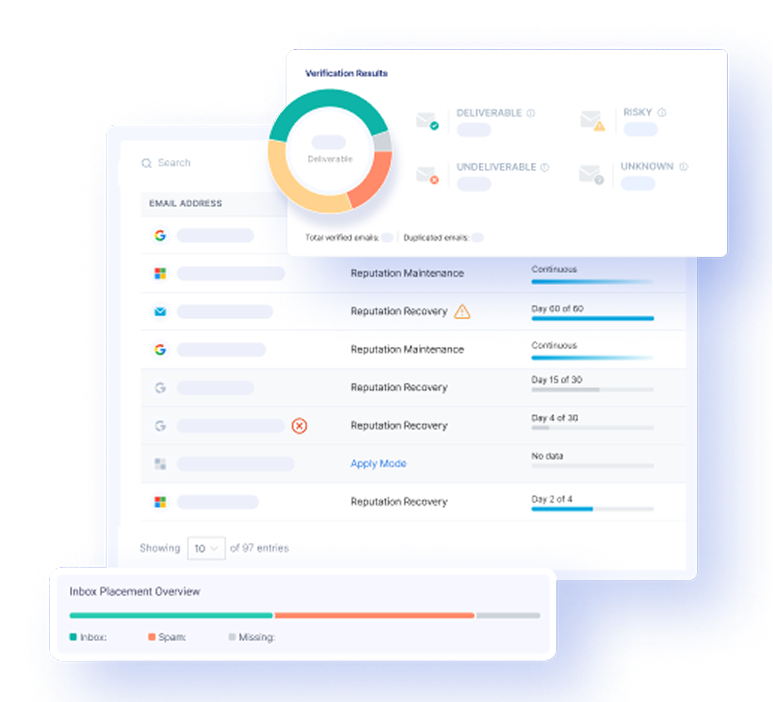
Automated SPF optimization, guided policy rollout, and instant alerts for DNS or alignment changes help organizations respond faster to authentication risks while maintaining consistent email delivery.
Specialized Technical Assistance
Enterprise deployments may include dedicated onboarding and technical guidance to support policy configuration, enforcement planning, and troubleshooting. Continuous email-based support ensures timely help whenever authentication issues arise.
Detailed Activity Logging
The platform maintains complete records of all administrative actions, including DNS updates, policy adjustments, and user access changes. Each entry is logged with timestamps and user identification, supporting stronger visibility, security oversight, and compliance monitoring across teams.
Considerations
Organizations seeking a broader all-in-one email security suite may have to deploy EasyDMARC alongside complementary email gateways and threat protection tools as part of a layered security strategy.
2. Proofpoint
Proofpoint offers a DMARC-focused capability within its broader email security ecosystem, primarily through its Email Fraud Defense solution. The platform is designed for large enterprises that want to combine authentication enforcement with advanced email protection technologies. It helps organizations identify legitimate senders, monitor authentication performance, and gradually move toward DMARC enforcement while maintaining normal email delivery.
Key Features
- Authentication visibility and monitoring: Provides insight into who is sending emails on behalf of the organization and whether messages are authenticating successfully.
- Guided DMARC deployment: Offers expert consulting and professional services that help organizations identify authorized senders, configure authentication records, and safely move toward enforcement policies.
- Fraud and spoofing protection: Helps prevent phishing and domain impersonation by strengthening authentication controls and detecting fraudulent sending activity targeting customers or partners.
- Integration with broader email security stack: DMARC capabilities work alongside other Proofpoint email protection tools, enabling enterprises to manage authentication and threat protection within a unified security environment.
Limitations to Consider
- Less specialized DMARC-only focus: Since DMARC functionality is part of a wider email security platform, some organizations may find fewer dedicated DMARC-centric reporting and automation features compared to niche DMARC services.
- Enterprise-oriented pricing and deployment: The solution is typically positioned for large organizations with broader security requirements, which may make it less practical for smaller teams seeking lightweight DMARC-only tools.
All-in-all, Proofpoint serves enterprises that prefer integrating DMARC enforcement into a larger email security architecture rather than using a standalone DMARC platform.
3. Mimecast
Mimecast provides a managed DMARC service designed mainly for large enterprises that require structured visibility into their email authentication ecosystem. Its DMARC Analyzer platform helps organizations monitor SPF, DKIM, and DMARC alignment, understand email traffic behavior, and gradually move toward policy enforcement using guided implementation support. The solution simplifies authentication management while giving security teams centralized oversight of domain activity.
Mimecast’s Key Features
- Authentication monitoring: Tracks SPF, DKIM, and DMARC alignment to help organizations identify legitimate and unauthorized senders.
- Traffic visibility dashboards: Provides visual reports that help teams understand sending sources, authentication success rates, and domain usage trends.
- Guided enforcement support: Offers expert assistance to help enterprises safely transition from monitoring to enforcement without disrupting legitimate email delivery.
- Enterprise-focused deployment: Designed to support complex enterprise environments that manage large volumes of email traffic and multiple sending services.
Mimecast’s Limitations to Consider
- Limited advanced intelligence capabilities: The platform does not currently emphasize built-in AI-driven detection or expanded threat intelligence features that some modern DMARC platforms provide.
- Higher pricing structure: Costs are not publicly disclosed, making it less suitable for small or mid-sized organizations with tighter budgets.
- Reporting customization constraints: Some users note that dashboard and reporting customization options may be less flexible compared to specialized DMARC-focused tools.
Overall, Mimecast serves as a structured enterprise-grade DMARC vendor for organizations that prioritize centralized visibility and guided authentication enforcement within larger security ecosystems.
How to Choose the Right DMARC Service for Your Business
Selecting the right DMARC platform depends on your organization’s size, technical resources, and long-term email security goals. Evaluating a few key factors can help businesses choose a service that fits both current requirements and future growth plans.
SMB vs Enterprise Considerations
Small and mid-sized businesses usually prefer tools that are simple to use, affordable, and quick to set up. They benefit from platforms that offer step-by-step onboarding, ready-made dashboards, and automatic monitoring, so they do not need a full security team to manage everything. Large enterprises, however, often handle many domains, multiple email services, and very high email volumes. As a result, they may require advanced features such as managing multiple domains in one place, team-specific access levels, integrations with existing security tools, and dedicated technical support. Knowing how many domains, sending services, and teams will use the platform can help to choose the right solution.
Budget vs Automation Depth
Cost is an important factor, but choosing the cheapest option is not always the best decision. Some services offer basic monitoring at a lower price, while others include automation features that reduce manual work and make enforcement easier. Businesses should consider how much effort their internal teams will need to manage authentication if automation is limited. In many cases, paying for better automation can actually save time, reduce mistakes, and lower operational effort over the long term.
Deployment Speed
Setup time is also important, especially for organizations that need to meet email authentication requirements quickly. Some platforms allow fast setup by automatically creating records, identifying sending sources, and guiding users through policy enforcement steps. Other tools may require more manual work and take longer to configure. Choosing a service that matches how quickly you need to deploy will help you complete the setup smoothly and start seeing authentication results sooner.
Final Thoughts: Choosing the Right DMARC Provider in 2026
Email security rules are becoming stricter each year, so choosing the right provider is now an important business decision. Instead of selecting a tool only based on the number of features, organizations should look for a platform that is easy to use, offers clear reports, and provides helpful automation to manage authentication smoothly.
It is also important to choose a solution that can grow with your organization as you add more domains, services, or sending sources. When businesses focus on usability, visibility, and reliable support, they can build a strong email authentication setup that protects their brand reputation, improves email delivery, and keeps customer trust strong in 2026 and beyond.

 We’re glad you joined EasyDMARC newsletter! Get ready for valuable email security knowledge every week.
 You’re already subscribed to EasyDMARC newsletter. Continue learning more about email security with us


