

For managed service providers, DMARC is not a one-time setup. It becomes an ongoing operational responsibility tied to how you manage, monitor, and guide email authentication across multiple client domains.
Each client may have a different infrastructure, sending behavior, and level of readiness for DMARC enforcement. That means vendor selection is not just about features. It directly affects how efficiently you can scale, how clearly you can interpret authentication data, and how confidently you can move domains from monitoring to enforcement.
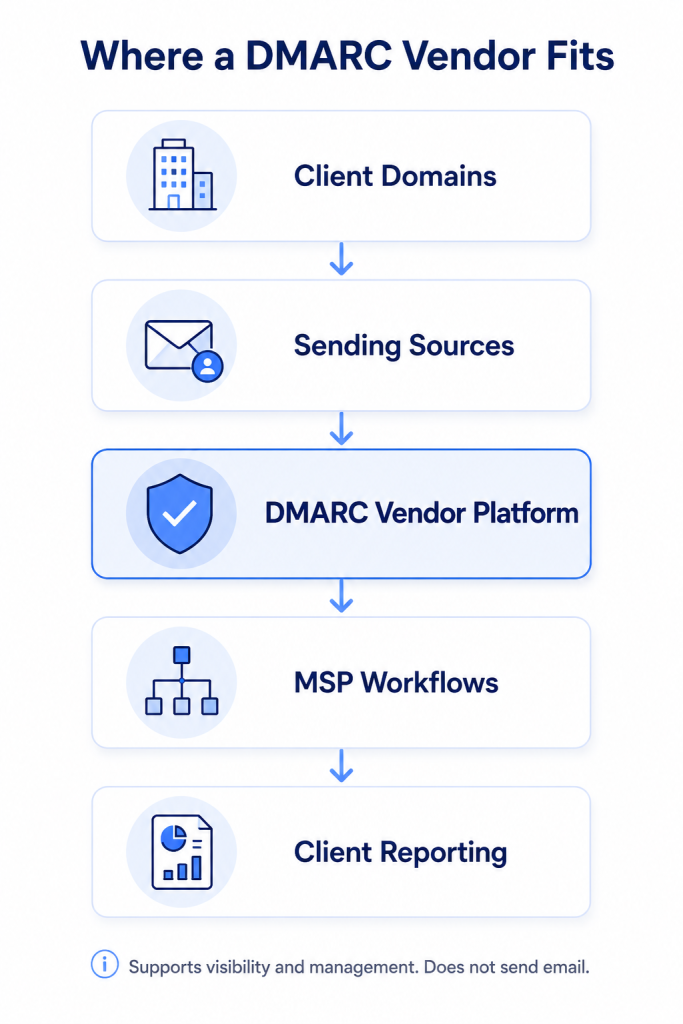
A DMARC vendor, in this context, acts as a centralized layer for visibility and analysis. It helps you interpret aggregate reports, understand which sources are sending on behalf of a domain, and support policy decisions based on that data. It does not send emails, control infrastructure, or replace existing email providers. Instead, it supports the process of managing authentication and alignment across environments.
This guide focuses on practical evaluation criteria that matter specifically for MSP workflows. From multi-tenant management and API access to reporting depth and onboarding support, the goal is to help you choose a solution that fits long-term operational needs, not just initial setup.
Why DMARC Vendor Selection Is Different for MSPs
DMARC vendor selection becomes more complex in MSP environments because you are not managing a single domain or a single infrastructure. You are responsible for multiple clients, each with their own email providers, sending sources, and authentication setups.
This introduces challenges that go beyond initial configuration. Ongoing monitoring, policy progression, and client communication all need to be handled in parallel across different environments. What works for one domain may not apply to another, which makes consistency and visibility critical.
Unlike one-off implementations, DMARC in an MSP context is an ongoing service. You are continuously reviewing authentication data, identifying authorized and unauthorized sending sources, and guiding clients toward stricter policies over time. This requires tools that support repeatable workflows rather than manual, one-by-one management.
It is also important to understand how this responsibility differs depending on your role. For example, the difference between MSP and MSSPs often comes down to scope. MSPs typically manage infrastructure and services, including email authentication, while MSSPs focus more on broader security monitoring and response. In both cases, DMARC contributes visibility into domain usage, but for MSPs, it becomes part of day-to-day operational management.
Because of this, vendor selection needs to prioritize centralized control, clear reporting, and the ability to manage multiple domains efficiently without losing visibility into individual client environments.
Multi-Tenant and White-Label Capabilities
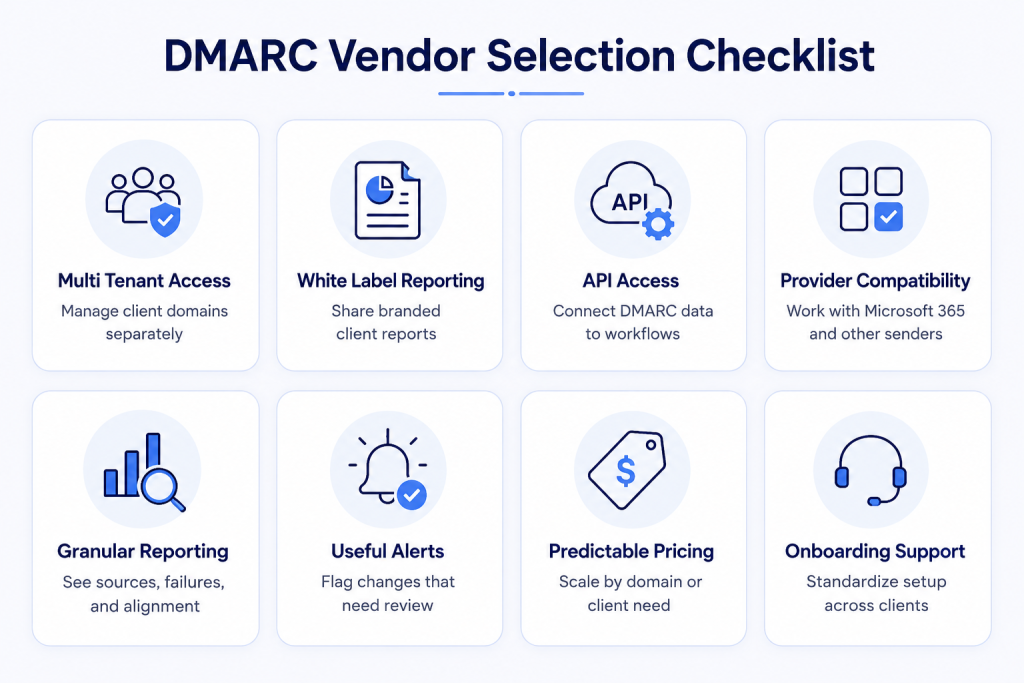
In an MSP environment, DMARC management rarely happens one domain at a time. You are working across multiple clients, each with separate infrastructures, sending sources, and access requirements. This is where a DMARC solution for multi-tenant environments becomes essential.
A multi-tenant DMARC solution allows you to manage all client domains from a single platform while keeping each environment logically separated. The goal is not just convenience, but operational clarity and control.

What Multi-Tenant Support Should Enable
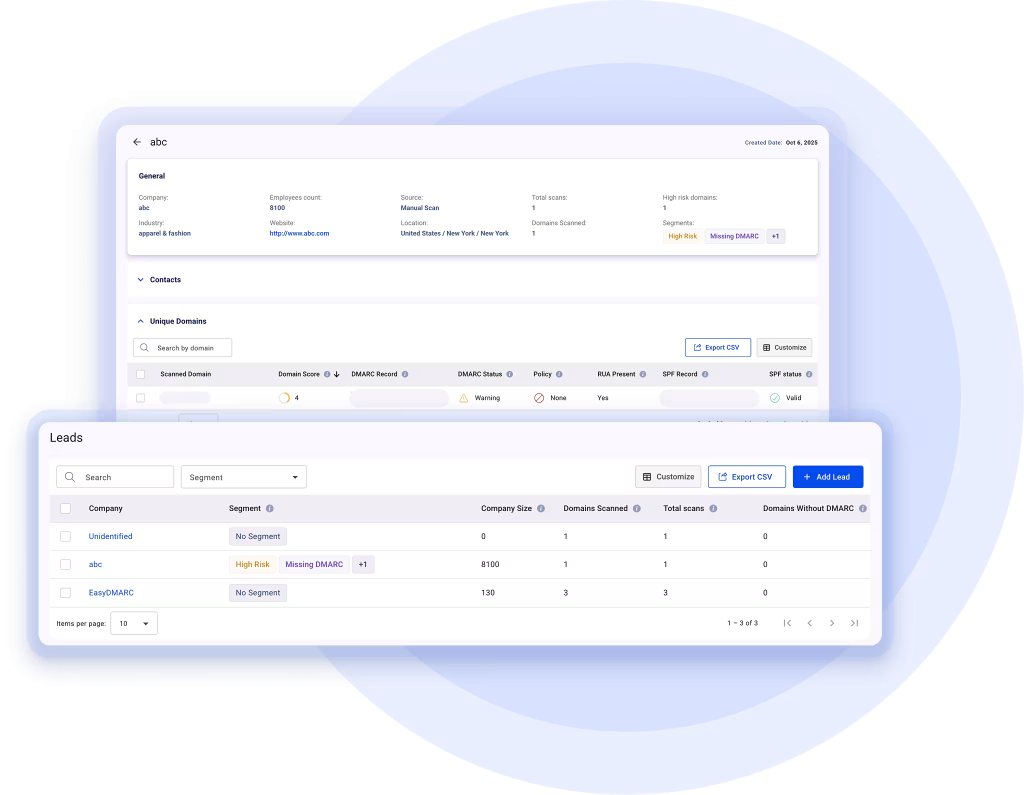
- Centralized domain management: View and manage all client domains from one interface without switching between accounts.
- Isolated client environments: Keep each client’s data, reports, and configurations separate to avoid overlap or confusion.
- Delegated access and permissions: Assign access based on roles. For example, internal teams may need full visibility, while clients may only need limited access to their own data.
- Consistent workflows across clients: Apply the same monitoring and policy progression processes without rebuilding them for every domain.
These capabilities help reduce manual effort, but they do not remove the need for oversight. Each domain still requires ongoing review of DMARC data, especially when identifying legitimate sending sources and preparing for enforcement.
White-Label Considerations
For MSPs offering DMARC as a service, white-label functionality can play a role in how that service is delivered to clients.
- Branded reporting: Present DMARC insights under your own brand when sharing reports with clients.
- Client-facing access: Allow clients to log in and view their own domain data without exposing backend complexity or other client environments.
- Simplified communication: Provide clear, client-friendly views of authentication results without requiring them to interpret raw aggregate reports.
White-labeling is not just about presentation. It helps standardize how you communicate DMARC insights and maintain a consistent client experience while managing multiple domains behind the scenes.
API Access and Automation Capabilities
For MSPs managing DMARC across multiple clients, API access is a practical requirement rather than an advanced feature. It allows DMARC data to connect with existing systems and workflows, instead of being handled in isolation.
The focus here is not on full automation but operational flexibility. APIs help reduce repetitive manual work while keeping control over how data is interpreted and acted on.
Integration with Internal Tools
API access makes it possible to bring DMARC data into the systems your team already uses. This can include dashboards, ticketing platforms, or internal management tools. Instead of switching between environments, your team can work with DMARC insights alongside other operational data.
Workflow Consistency Across Clients
Managing multiple domains requires repeatable processes. APIs support this by allowing you to standardize onboarding and monitoring workflows. This reduces repetitive platform tasks and helps maintain consistency across different client environments.
Centralized Visibility
By integrating DMARC data into your internal systems, you can create a more unified view of domain activity. This helps your team track authentication results and identify patterns without relying solely on the vendor’s interface.
Practical Use Cases
In day-to-day operations, APIs are commonly used to sync domain data, route alerts into existing monitoring workflows, and support reporting processes. These use cases help streamline operations while keeping human oversight in place. This is especially relevant when working with DMARC solutions with API integration for security tools, where DMARC data becomes part of a broader operational setup rather than a standalone view.
What to Evaluate in a Vendor API
Not all APIs are equally useful in MSP environments. When evaluating vendors, focus on usability rather than availability. Clear documentation, reliable endpoints, and support for common integration patterns will make a measurable difference in how efficiently your team can operate.
Integration with Microsoft 365 and Major Email Providers
Most MSPs operate across mixed email environments, with Microsoft 365 being one of the most common sending platforms across client bases. EasyDMARC gives MSPs centralized visibility into what is sending from each domain, how those systems are performing, and where risks are emerging across client environments. Rather than relying on fragmented data spread across provider dashboards and logs, MSPs can see sending activity across M365 tenants, third-party services, and internal applications from a single interface, mapped against authentication results and reputation signals.
Visibility Across Sending Sources
In multi-provider environments, domains typically send from multiple systems simultaneously: internal applications, marketing platforms, ticketing tools, and cloud services alongside M365. EasyDMARC surfaces these sources centrally, showing which systems are sending from each domain, how they align with DMARC policy, and where authentication gaps exist.
For MSPs managing multiple clients, this removes the need to piece together data manually across provider tools and makes it significantly faster to identify legitimate sources and investigate unexpected ones.
Consistent Interpretation Across Providers
Each email provider handles authentication differently, particularly around DKIM configuration and alignment. EasyDMARC normalizes this data across providers so your team can interpret authentication results consistently, regardless of the underlying infrastructure.
This is especially important in MSP environments where one client may be fully on M365, another on a hybrid setup, and another using a third-party ESP. Consistent reporting across all of them supports repeatable workflows and reduces the operational burden of context-switching between environments.
Supporting Investigation and Operational Workflows
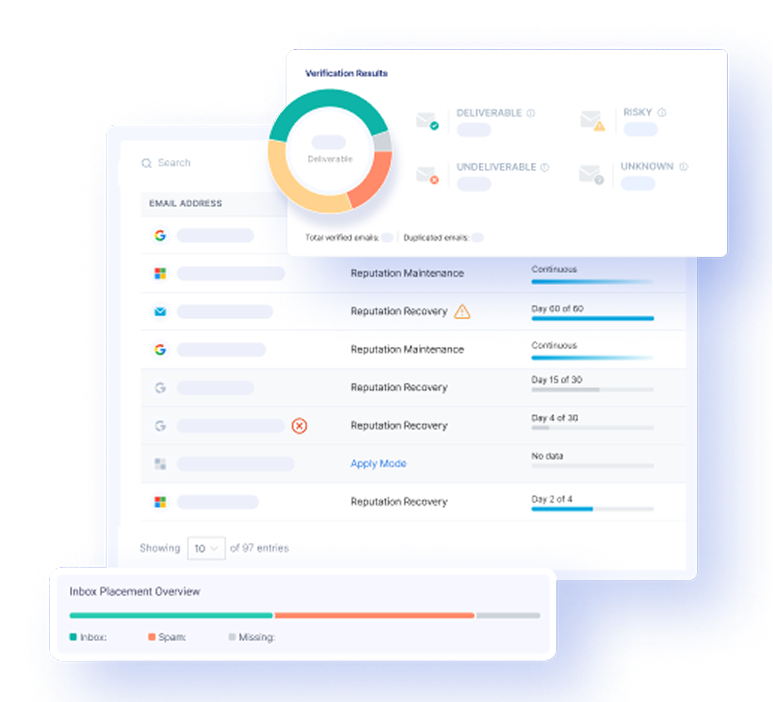
When delivery issues or authentication failures occur, EasyDMARC’s diagnostic layer helps teams identify which systems or senders are contributing to the problem without manually correlating logs across tools. This includes visibility into bounce patterns, reputation changes, and abnormal sending behavior that may not surface through DMARC aggregate reports alone.
The result is a platform that complements existing email providers rather than replacing them, giving MSPs the operational context needed to monitor domain health, investigate incidents faster, and support informed decisions around policy enforcement.
Reporting Granularity and Alerting
For MSPs, reporting is one of the most critical aspects of DMARC management. Since decisions around policy progression and domain alignment depend on data, the level of detail provided by a vendor directly impacts how effectively you can manage multiple client environments.
Not all reporting is equally useful. High-level summaries may provide a quick overview, but they are often not enough for identifying specific sending sources or understanding authentication behavior across domains.

What Granular Reporting Should Include
Granular reporting determines how well you can understand and act on DMARC data across multiple client environments.
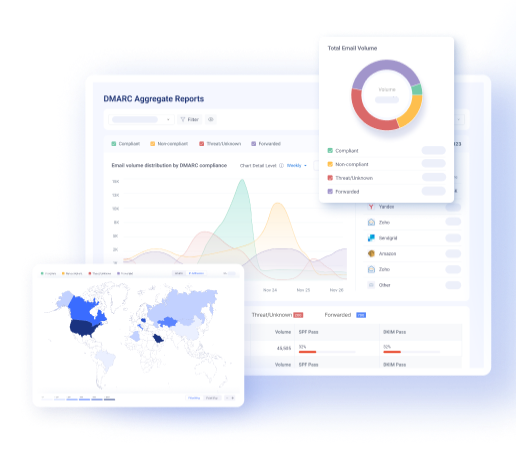
- Source-level visibility: Clear identification of sending sources associated with each domain, including third-party services and internal systems.
- Authentication pass and fail breakdowns: Detailed insights into how messages perform against SPF and DKIM checks, helping you understand where alignment issues may exist.
- Domain alignment insights: Visibility into whether sending sources align with the domain, which is essential for supporting DMARC policy decisions.
- Trend and pattern analysis: Aggregated data over time that helps identify consistent sending behavior or unexpected changes in activity.
Alerting and Notifications
Alerting should support awareness and investigation rather than imply real-time threat detection. The goal is to surface meaningful changes in domain activity so they can be reviewed and addressed as part of operational workflows.
- Misconfiguration alerts: Notifications when authentication records or policies are not properly set up or updated.
- Unrecognized sending sources: Alerts highlighting new or unexpected sources identified through DMARC data.
- Policy-related changes: Updates when domains move between monitoring and enforcement stages.
For MSPs, the value of reporting and alerting lies in how actionable the data is. Clear, structured insights make it easier to interpret DMARC reports, communicate findings to clients, and support informed decisions about domain alignment and policy progression.
Forensic Visibility and Incident Investigation
For MSPs, DMARC data plays an important role in supporting the investigation of unusual or unexpected domain activity. Rather than providing instant answers, it helps build a clearer picture over time by showing how different sources interact with a domain.
Aggregate reports form the foundation of this visibility. They provide patterns and trends across sending sources, making it possible to identify consistent behavior as well as changes that may require further review. This is particularly useful when managing multiple client domains, where spotting anomalies depends on understanding what “normal” looks like for each environment.
In some cases, additional failure-reporting or forensic-level data may be available to support deeper analysis. This type of data can help examine specific incidents more closely, offering more context around individual messages and how they were authenticated. However, availability and level of detail can vary depending on the provider and configuration.
It is important to note that DMARC reporting itself does not block or stop suspicious activity. Instead, it informs policy enforcement by providing the data needed to understand domain alignment and sending behavior. For MSPs, this makes it a valuable input into broader investigation and response workflows rather than a standalone security control.
Pricing Models That Scale for MSPs
Pricing structure has a direct impact on how sustainable a DMARC service is for MSPs managing multiple clients. Since domain counts can grow quickly, the wrong pricing model can introduce unnecessary complexity or unpredictable costs.
Per-Domain Pricing
Per-domain pricing is often the most straightforward model for MSP environments. It allows you to scale services based on the number of domains under management, making it easier to forecast costs as your client base grows.
This model also aligns well with how DMARC is implemented, since policies and reporting are managed at the domain level. As a result, it simplifies both internal tracking and client billing.
Per-Mailbox or Volume-Based Pricing
Some vendors structure pricing based on the number of mailboxes or the volume of emails processed. While this may work for single organizations, it can become difficult to manage across multiple clients with varying email usage patterns.
In MSP environments, this model may introduce variability in costs that is harder to predict or standardize, especially when clients have fluctuating email volumes.
Cost Predictability and Client Scalability
For MSPs, predictable pricing is key to maintaining consistent margins and scaling services efficiently. A model that aligns with domain-based management makes it easier to onboard new clients without re-evaluating cost structures each time.
It also simplifies communication with clients, as pricing can be clearly tied to the number of domains being managed rather than usage metrics that may be harder to explain.
Ultimately, the goal is to choose a pricing structure that supports long-term scalability while keeping operational and financial planning manageable.

MSP Partner Programs, SLAs, and Onboarding Support
Beyond technical capabilities, vendor support structure plays a major role in how effectively MSPs can deliver and scale DMARC services. Since onboarding and ongoing management happen across multiple client environments, having a clear support framework reduces friction and improves consistency.
Structured Onboarding Processes
A well-defined onboarding process helps standardize how new domains are brought into DMARC monitoring. This includes guidance on DNS configuration, initial policy setup, and validation of sending sources.
For MSPs building a repeatable service offering, this often aligns with broader practices covered in DMARC for MSP, where consistency across client environments is critical.
Documentation and Operational Guidance
Clear documentation is essential when working across different infrastructures and client setups. Vendors should provide practical guidance that supports real-world implementation, not just theoretical explanations.
This includes step-by-step instructions, best practices for policy progression, and examples that help teams interpret DMARC data and apply it consistently.
SLA Expectations and Support Access
Service level agreements define how quickly issues are addressed and what level of support is available. For MSPs, this is especially important when managing multiple clients who may rely on timely updates and guidance.
Access to responsive support channels ensures that configuration issues or unexpected findings in DMARC data can be reviewed and addressed without unnecessary delays.
MSP Partner Considerations
Some vendors offer partner programs specifically designed for MSP environments. These may include dedicated support channels, training resources, and operational guidance tailored to managing multiple domains at scale.
When comparing options, it can also be helpful to review how different providers structure their offerings, such as those discussed in the top DMARC vendors for MSPs, to understand variations in partner support models.
Platforms like EasyDMARC also offer structured onboarding and partner support models designed for MSP environments, helping teams implement consistent processes across their client base.
Supporting Long-Term Operations
Onboarding is only the starting point. As DMARC policies evolve and client environments change, ongoing support becomes part of daily operations. A vendor that provides continuous guidance and reliable support can make it significantly easier to manage DMARC as a long-term service rather than a one-time setup.
Key Questions to Ask Before Choosing a DMARC Vendor
Before comparing vendors, use these questions to evaluate how well each platform supports MSP workflows across client management, integrations, reporting, support, and pricing.
Can the platform support multi-tenant environments without operational friction?
A DMARC vendor should allow you to manage multiple client domains from a single interface while keeping each environment isolated. This includes role-based access, clear separation of data, and the ability to switch between clients without confusion. The goal is to maintain centralized control without losing visibility into individual domains. For MSPs, this directly impacts efficiency, especially as the number of managed clients grows. A platform that handles multi-tenant environments well reduces manual effort and supports consistent workflows across all domains.
What level of API access is available?
API access should enable integration with your existing tools rather than require separate management. Look for vendors that provide clear documentation, stable endpoints, and flexibility in how data can be used. APIs should support tasks like syncing domain data, routing alerts, and generating reports. For MSPs, this helps streamline operations while keeping oversight in place. The focus should not be on full automation, but on reducing repetitive work and improving how DMARC data fits into your overall workflow.
How does the platform integrate with existing email infrastructure?
A DMARC solution should work alongside email providers like Microsoft 365 and not attempt to replace them. Email providers handle sending infrastructure and DKIM signing, while DMARC platforms monitor and analyze authentication results. The vendor should provide clear visibility into sending sources across different providers and help you understand how they align with the domain. This is especially important for MSPs managing diverse client environments, where consistency in interpreting data across infrastructures is key.
What level of reporting detail is provided?
Reporting should go beyond basic summaries and provide detailed insights into domain activity. This includes visibility into sending sources, authentication pass and fail rates, and domain alignment status. The ability to track trends over time is also important for identifying changes in behavior. For MSPs, granular reporting supports informed decision-making and helps communicate findings clearly to clients. Without sufficient detail, it becomes difficult to understand how domains are being used and how policies should evolve.
How are alerts configured and delivered?
Alerts should help surface meaningful changes in domain activity without implying real-time threat detection. A good platform will notify you about misconfigurations, new or unrecognized sending sources, and policy-related updates. These alerts should integrate into your existing workflows, such as ticketing or monitoring systems. For MSPs, the value lies in how actionable these alerts are and how easily they can be incorporated into daily operations. Alerts should support investigation and response, not replace them.
What onboarding and support does the vendor provide?
Onboarding should follow a structured process that helps standardize how domains are added and configured. Vendors should offer clear documentation, guidance on policy progression, and responsive support channels. For MSPs, this ensures consistency across client environments and reduces the risk of misconfiguration. Ongoing support is equally important, as DMARC management continues beyond initial setup. A vendor with strong onboarding and support helps maintain operational stability as your client base grows.
How does pricing scale as client count grows?
Pricing should align with how MSPs manage domains. Per-domain pricing is often more predictable and easier to scale compared to volume-based models. It allows you to onboard new clients without significant changes to your cost structure. Transparent pricing also simplifies communication with clients and helps maintain consistent margins. For MSPs, scalability is not just about adding more domains, but doing so without increasing operational or financial complexity. A clear pricing model supports long-term planning and growth.
Final Considerations for Long-Term DMARC Management
DMARC should be treated as an ongoing program rather than a one-time implementation. For MSPs, this means continuously monitoring authentication data, reviewing sending sources, and guiding domains through policy progression from monitoring to enforcement based on verified alignment.
As client environments evolve, new services, vendors, or infrastructure changes can introduce additional sending sources. Maintaining visibility into these changes is essential for ensuring that legitimate sources remain aligned with the domain and that policy decisions are based on accurate, up-to-date data.
Managing DMARC across multiple clients also requires coordination and consistency. While processes should be repeatable, they must remain flexible enough to accommodate differences in infrastructure and operational needs across domains.
Ultimately, DMARC vendor selection is a long-term operational decision. The right platform should support ongoing monitoring, structured workflows, and clear visibility at scale, enabling MSPs to manage domain authentication effectively across their entire client base.

 We’re glad you joined EasyDMARC newsletter! Get ready for valuable email security knowledge every week.
 You’re already subscribed to EasyDMARC newsletter. Continue learning more about email security with us


