
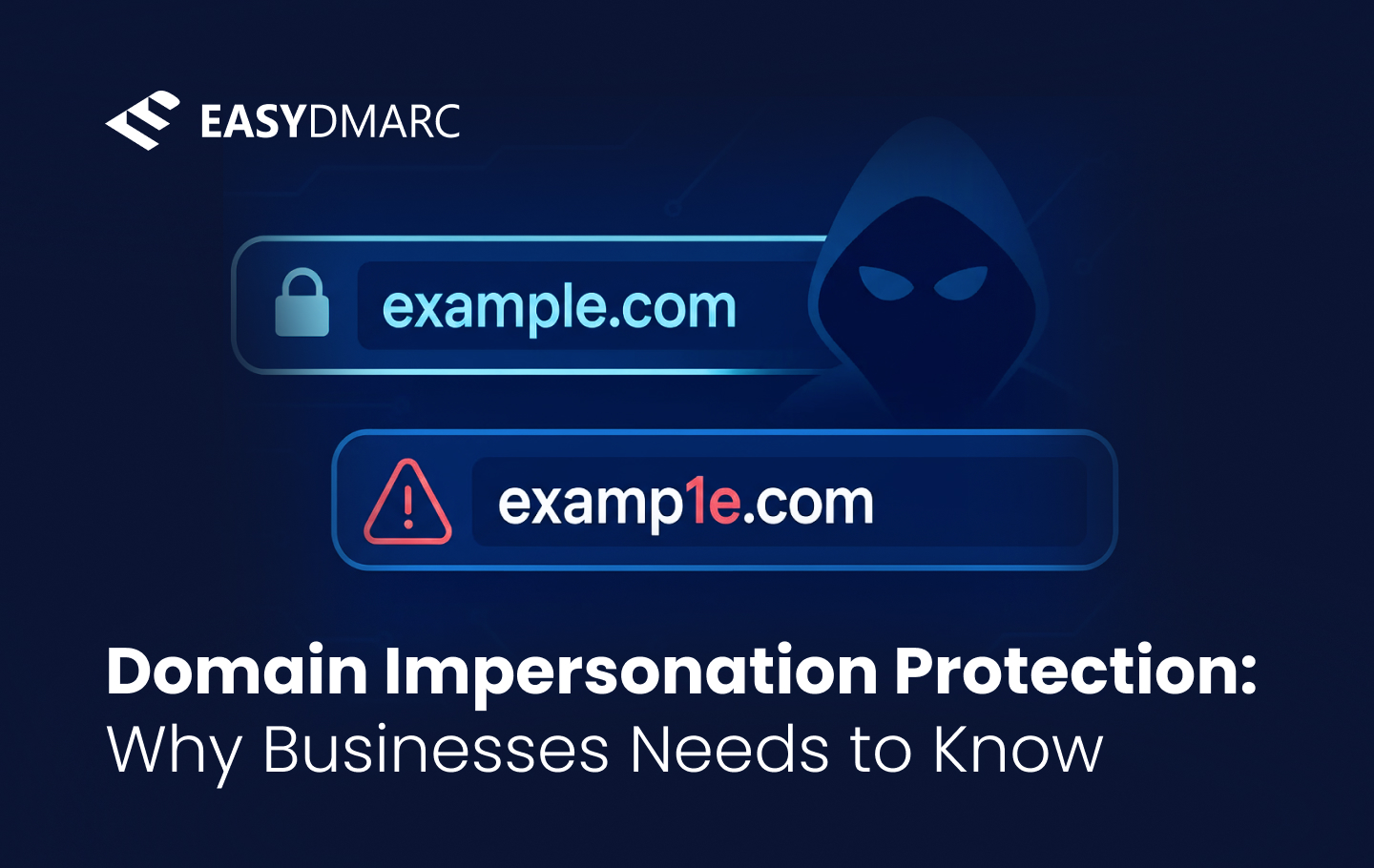
Domain impersonation is a growing threat where attackers create fake domains that look almost identical to real business domains. These domains are used to send deceptive emails, steal credentials, or trick employees into transferring money. Simple changes like an added letter or a different top-level domain can easily go unnoticed.
Strong domain impersonation protection identifies and blocks these fraudulent domains early. In this blog, you will learn how domain impersonation works, the real-world business risks associated with it, and essential steps and tools to protect your domain and email ecosystem.
What is Domain Impersonation?
Domain impersonation happens when attackers create fake domains that look almost identical to a real company’s domain to trick people. They use tactics like typosquatting, swapping similar letters, or adding extra characters that are hard to notice. For example, someone trying to mimic easydmarc.com might register easydmarc.co, easydrnarc.com, or easydmarcc.com. Most people don’t notice these small differences, which makes the attack very effective.
With continuous domain monitoring, such suspicious domains can be detected early before they are used in phishing or fraud attempts. Attackers also pair these fake domains with real conversation data from compromised accounts to make their emails look genuine. This is where email impersonation protection becomes important, helping stop scams like fake vendor payment requests or false messages from senior executives.
Why Businesses Need Domain Impersonation Protection
Businesses rely on email and online communication to interact with customers, vendors, and employees. When attackers impersonate a company’s domain, they can trick people into sharing sensitive information, sending payments, or clicking on malicious links. These attacks can lead to financial loss, data breaches, and serious damage to a company’s reputation.
Securing your domains helps prevent these risks by identifying and blocking fake domains before they cause harm. It also ensures that legitimate business emails are trusted by recipients. For organizations handling customer data or financial transactions, email impersonation protection adds another layer of security against targeted phishing and social engineering attacks.
By actively monitoring and protecting domains, businesses can maintain brand trust, protect customers, and avoid the high costs associated with impersonation-based fraud.
How Domain and Email Impersonation Protection Works
Domain and email impersonation attacks can look convincing, but several layers of protection help detect and stop them before they cause harm. Effective domain impersonation protection combines technical controls, continuous monitoring, and smart detection systems that identify unusual or fake activity in real time.
SPF, DKIM, and DMARC Authentication
These three authentication protocols verify that an email is sent from a trusted source.
- SPF checks if the sender’s IP address is authorized to send emails for a domain.
- DKIM ensures the message content is not altered in transit.
- DMARC ties both together, instructing mail servers to reject or quarantine unauthenticated messages.
This authentication framework serves as the foundation for strong email impersonation protection and helps prevent spoofed messages from reaching inboxes.
Domain Monitoring and Brand Protection Tools
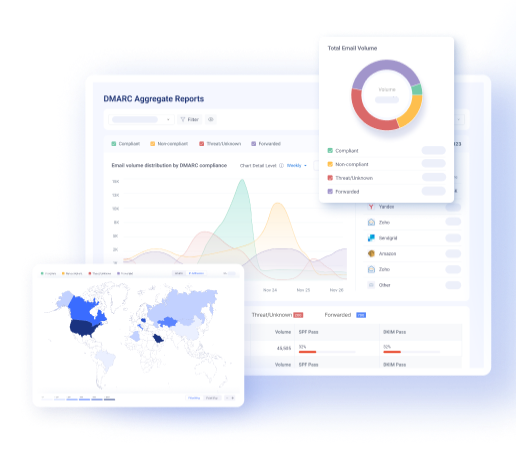
Attackers often register lookalike domains to trick users. Domain monitoring tools track new domain registrations that closely resemble your legitimate one. Brand protection services flag these impersonating domains early so they can be taken down before use. This continuous visibility protects domains and helps maintain trust with customers and partners.
AI-Driven Impersonation Detection
Artificial intelligence tools analyze email patterns, sender behavior, and communication context. They detect subtle signs of impersonation, such as mismatched display names or unusual sending times. These systems provide a faster, more accurate way to identify targeted impersonation attempts and improve overall email impersonation protection.
Enabling Impersonation Protection for Internal and External Sender Domains
Impersonation threats are not limited to outsiders. Attackers can also mimic internal email addresses to deceive employees or initiate internal phishing attacks. Organizations must enable impersonation protection for these internal and external sender domains to close all entry points.
Here are the two primary steps you need to take-
Setting Up Authentication for Internal Domains
Impersonation often starts within the organization itself, where attackers try to spoof internal email addresses to target employees or management. To prevent this, every internal domain should create individual TXT records using the EasyDMARC SPF Record Generator, DKIM Record Generator, and DMARC Record Generator.
In addition to these protocols, internal mail gateways should be configured to flag or block any messages claiming to be from internal domains but failing SPF, DKIM, or DMARC checks. This approach ensures that only verified emails circulate within the company network, minimizing the risk of internal phishing or data leaks.
Regularly using a DMARC Record Lookup Tool and tightening internal policies also helps maintain a consistent security posture across departments and communication tools.
Monitoring Partner and Vendor Emails
Partners, suppliers, and vendors often communicate over email, making them a prime target for impersonation attacks. Attackers may register lookalike domains or compromise a legitimate vendor account to send convincing fake invoices or payment requests.
Organizations need to actively monitor vendor and partner domains to detect unusual activity or new lookalike registrations. Using tools with real-time alerts can help identify these threats early.
For added security, companies should implement email impersonation protection that analyzes sender reputation, domain alignment, and message behavior patterns. This helps detect impersonated vendor emails that appear genuine at first glance.
Maintaining a verified vendor contact list, using secure communication portals, and regularly educating staff about impersonation risks further reduces the chances of falling for fake requests or manipulated payment details.
Why Domain Impersonation Protection Is Essential for Businesses
By combining domain impersonation protection with advanced email impersonation protection, businesses can secure their communication channels, protect employees, and maintain brand credibility.
EasyDMARC makes this process easier by providing automated monitoring, DMARC enforcement, and domain spoofing detection. Start with our free 14-day trial to stay ahead of evolving email-based threats.
Frequently Asked Questions
Common signs include email addresses with slight spelling errors, unexpected messages from executives, or unusual payment requests. You may also notice domains with extra letters or different extensions, such as .net instead of .com. Emails may contain urgent requests or suspicious links. Always verify the sender’s address carefully before responding.
To enable impersonation protection for these internal and external sender domains, start by setting up SPF, DKIM, and DMARC for all domains your business uses. Configure mail servers to reject messages that fail authentication checks. Use domain monitoring tools to watch for lookalike registrations. Finally, train employees to recognize spoofing attempts and verify suspicious communications before acting.
Yes. If an attack results to data loss, fraud, or business disruption, your company may face penalties under laws such as GDPR or industry rules. In some cases, regulators can issue fines for inadequate email security, poor domain protection practices, or delayed breach reporting. Strengthening domain and email authentication helps reduce both security and legal exposure.
 We’re glad you joined EasyDMARC newsletter! Get ready for valuable email security knowledge every week.
 You’re already subscribed to EasyDMARC newsletter. Continue learning more about email security with us


