
You can follow every best practice in the book and still watch your campaigns land in spam. The copy is clean. The lists are permission-based. The infrastructure hasn’t changed, at least not intentionally. Yet inbox placement keeps slipping, open rates drop, and performance becomes unpredictable.
That’s because email deliverability problems are rarely caused by a single mistake. In most cases, they’re the result of multiple small signals interacting over time: subtle authentication mismatches, shifting sender reputation, changes in sending behavior, or mailbox provider filtering logic that evolves quietly in the background. These issues don’t always surface in standard dashboards, and they’re often hard to diagnose without deep, specialized experience.
Handling this in-house can be challenging. Hiring an email deliverability specialist means investing in recruitment, onboarding, training, and advanced tooling for a role that may only be critical during specific periods. Maintaining that expertise long term also requires continuous education as ISP behavior, authentication standards, and sender reputation models change.
This is where an email deliverability consultant becomes a practical alternative. Instead of building permanent internal capacity, organizations bring in targeted expertise to identify root causes, stabilize inbox placement, and set a clear path toward long-term improvement. Consultants focus on diagnosis and strategy, understanding why emails are failing and what needs to change to restore trust with mailbox providers.
Automation plays an important supporting role here. It doesn’t replace expertise, but it helps surface issues earlier, reduce manual investigation, and maintain visibility between reviews. When paired with expert guidance, automation makes deliverability problems easier to detect, validate, and prevent, before they escalate into campaign-wide failures.
Why Email Campaigns End Up in the Spam Folder
When email campaigns miss the inbox, the cause is usually not a single mistake. Email deliverability experts consistently see the same underlying patterns emerge across different senders, industries, and platforms. These issues tend to build quietly over time, making them difficult to detect without focused analysis.
Common reasons campaigns end up in spam include:
- Authentication misalignment across domains and sending tools: SPF, DKIM, and DMARC may exist on paper, but without managed DMARC, subtle inconsistencies between domains, subdomains, and third-party senders can weaken trust signals. These gaps rarely trigger obvious errors, yet they significantly impact how mailbox providers evaluate legitimacy.
- Sudden changes in volume or engagement: Sharp increases in send volume, new campaign types, or re-engagement efforts can disrupt established sending patterns. Even legitimate growth or campaign changes may appear risky to ISPs when they differ from historical behavior.
- Hidden reputation issues that standard dashboards don’t reveal: Sender reputation is influenced by engagement trends, complaint rates, authentication consistency, and historical performance across multiple providers. Because these signals are distributed and constantly recalculated, problems often surface gradually rather than as a clear failure.
- Evolving ISP filtering behavior: Mailbox providers regularly adjust their filtering logic and weighting of signals. As these systems change, previously effective configurations may lose reliability without any visible internal change.
These patterns explain why deliverability problems often persist despite following general best practices. They also highlight why organizations turn to an email deliverability expert, someone who understands how these signals interact and how to restore alignment across the entire sending ecosystem.
How Email Deliverability Consultants Can Help
For many organizations, email deliverability consulting feels opaque. Campaigns underperform, inbox placement drops, and the assumption is often that the issue sits somewhere in content or list quality. In reality, email deliverability consulting focuses less on what is being sent and more on how messages are evaluated by mailbox providers.
An email deliverability consultant starts by diagnosing the full sending environment. This includes reviewing authentication alignment, domain usage, sending infrastructure, and reputation signals across ISPs. The goal is to identify patterns that undermine trust, even when no single error appears obvious.
Beyond diagnosis, consultants help remediate issues that impact inbox placement. This may involve correcting authentication gaps, isolating problematic traffic, or addressing reputation signals that suppress delivery. In some cases, consultants also engage directly with mailbox providers to clarify intent, resolve escalated issues, or guide recovery after deliverability incidents.
Email deliverability consulting services also play a strategic role. Rather than offering one-off fixes, consultants advise on sustainable sending practices that reduce long-term risk. This includes guidance on volume management, audience segmentation, and infrastructure decisions that support consistent deliverability as programs evolve.
What sets email deliverability consulting apart from general email marketing support is this combination of deep diagnostics, remediation expertise, and ongoing optimization. Consultants focus on restoring trust with mailbox providers and helping organizations maintain it, especially in environments where sending behavior, tools, and infrastructure change over time.
In House Expertise vs. Email Deliverability Consulting Services
For organizations facing deliverability challenges, the question is often whether to build internal expertise or rely on email deliverability consulting services. Both approaches can work, but they serve different operational realities.
In-house deliverability expertise can make sense for large-scale senders with constant, complex email activity. Teams that send high volumes daily or manage multiple brands may benefit from having a dedicated specialist who understands their infrastructure deeply and can respond immediately to issues as they arise. However, this approach comes with significant hidden costs. Hiring experienced deliverability talent is time-consuming and expensive, onboarding requires access to advanced tooling, and ongoing education is necessary to keep pace with changing ISP behavior and authentication standards.
Email deliverability consulting services offer a more flexible alternative. Instead of maintaining full-time expertise, organizations can access specialized knowledge when it’s actually needed. Consultants bring experience from working across multiple industries, infrastructures, and sending environments, allowing them to recognize patterns and risks that internal teams may not encounter often.
Automation plays an important role in bridging the gap between these two models. Automated platforms provide continuous monitoring and diagnostics that would otherwise require dedicated staff and specialized tools. This makes it possible to maintain visibility into deliverability health without committing to a full-time role, while still benefiting from expert support when deeper intervention is required.
For many organizations, the deciding factor is frequency. Deliverability issues tend to arise intermittently rather than continuously. In those cases, pairing email deliverability consulting services with automation offers a practical balance, providing both expert insight and ongoing oversight without the long-term overhead of internal ownership.
Why Email Deliverability Consulting Works Better With Automation
Email deliverability consulting is most effective when it’s supported by accurate data and continuous visibility. Consultants rely on clear signals to diagnose issues, validate fixes, and confirm that changes are working as intended. Without automation, that visibility is often limited to periodic reviews, leaving gaps where problems can quietly return.
Automation helps close those gaps. By continuously monitoring authentication, configuration, and domain health, tools like an alert manager surface issues that might otherwise go unnoticed between consulting engagements. This allows consultants to work with more complete information and reduces the risk of misdiagnosis based on partial or outdated data.
Another advantage of automation is speed. Authentication drift, configuration changes, or infrastructure updates can introduce deliverability risks without triggering immediate failures. Automated monitoring detects these shifts early, enabling faster corrective action before inbox placement is affected.
Automation also reduces the manual effort involved in ongoing validation. Tasks that would otherwise require repeated checks, such as confirming authentication alignment or tracking policy changes, are handled consistently in the background. This allows consultants to focus on analysis and strategy rather than repetitive verification work.
While automation does not replace expert judgment or experience, it significantly improves long-term stability after consulting interventions. By maintaining continuous oversight, organizations are less likely to see resolved issues resurface months later. The result is a more predictable deliverability environment, where expert consulting establishes direction and automation helps sustain it.
How Automation Improves Email Deliverability Long Term
While consultants play a critical role in diagnosing issues and setting strategic direction, long-term email deliverability depends on consistent oversight. Automation makes that oversight possible without the ongoing cost and disruption of repeated consulting engagements.
Automated platforms provide continuous visibility into authentication and domain health, eliminating the need for frequent manual checks and allowing teams to run an ongoing email deliverability test as configurations and sending behavior evolve. Instead of reacting to failed campaigns or sudden inbox drops, teams gain early insight into configuration drift, emerging risks, and reputation changes before they impact performance.
Over time, this reduces reliance on reactive consulting. Rather than bringing in external expertise for routine monitoring or validation, organizations can reserve consulting support for higher-impact moments, such as major infrastructure changes, rapid scaling, or recovery from significant deliverability incidents. This leads to more predictable costs and fewer surprises.
Automation also supports internal teams by making deliverability data easier to understand and act on. Clear reporting and alerts help teams maintain improvements established during consulting engagements, ensuring that progress isn’t lost as tools, domains, or sending behavior evolve.
The strongest results typically come from combining both approaches. Consultants establish a solid foundation and address complex issues, while automation maintains that foundation efficiently over time, keeping email programs stable, scalable, and resilient.
Why Not Just Hire a Consultant?
Hiring an email deliverability consultant can be highly effective, but it also comes with limitations. Consulting engagements are often project-based, time-bound, and focused on specific issues. Once the engagement ends, ongoing monitoring and validation usually fall back on internal teams.
Automation helps address this gap. Platforms like EasyDMARC provide continuous deliverability monitoring, support for DMARC setup, and visibility into email authentication without requiring constant external involvement. This allows businesses to maintain progress independently while still engaging consultants when deeper expertise or strategic guidance is needed.
Consultants continue to have an important role, particularly for complex environments or critical incidents. However, automation reduces the need for repeated consulting by handling routine monitoring, validation, and early detection more efficiently.
Easydmarc Improves Email Deliverability
EasyDMARC serves as a strong starting point for organizations at any stage of their email deliverability journey. Whether a team is working with an external email deliverability consultant, building internal expertise, or managing deliverability independently, EasyDMARC provides the visibility and structure needed to make informed decisions.
Rather than replacing expert involvement, EasyDMARC supports both consultants and internal teams by centralizing data, automating monitoring, and reducing the manual effort required to maintain deliverability over time.
Built for Visibility From Day One
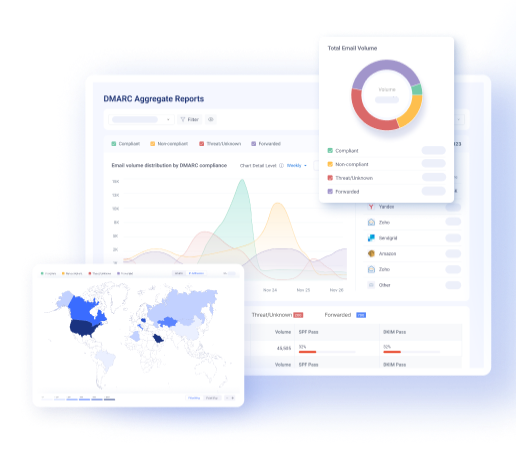
One of the biggest challenges in email deliverability is understanding the current state of authentication and domain health. EasyDMARC provides centralized visibility across domains, helping teams quickly identify gaps, misalignments, or risks that could impact inbox placement.
This shared view allows consultants and internal stakeholders to work from the same data set, reducing guesswork and speeding up diagnosis when issues arise.
Authentication That Supports Inbox Trust
EasyDMARC helps organizations establish and maintain strong authentication foundations by supporting DMARC, SPF, and DKIM setup in a way that ensures consistent and reliable email authentication across domains and sending sources. Proper policy alignment plays an important role in how mailbox providers assess legitimacy, making it easier to build and maintain sender trust over time.
Beyond initial setup, EasyDMARC provides ongoing validation that helps prevent authentication drift as infrastructure, tools, or sending behavior change. By addressing authentication early and maintaining it consistently, teams can reduce complexity and avoid common deliverability pitfalls before they escalate into larger inbox placement issues.
Ongoing Monitoring Without Manual Overhead
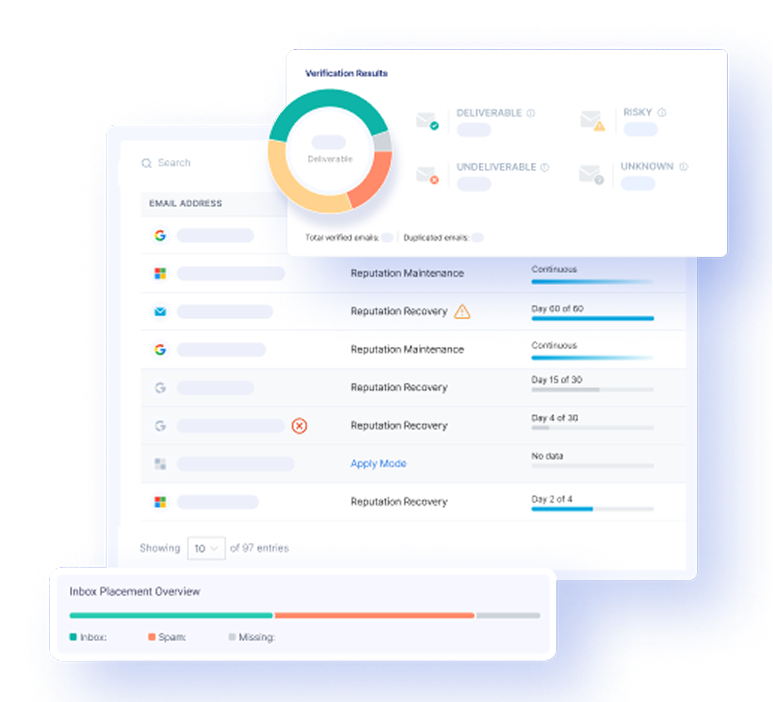
Maintaining deliverability requires more than one-time configuration. EasyDMARC’s monitoring tools help businesses track authentication status, domain health, and emerging risks over time without relying on manual checks or fragmented dashboards.
Clear reports and guided insights make it easier for teams to understand what’s happening and why, even without deep deliverability expertise.
A Foundation for Long Term Improvement
EasyDMARC helps organizations improve deliverability gradually and sustainably. By providing continuous monitoring and consistent data, the platform supports long-term improvements regardless of whether responsibility sits with a consultant, an internal team, or both.
Many organizations use EasyDMARC to establish a stable baseline before engaging consultants, while others rely on it to maintain progress after consulting engagements end. In both cases, EasyDMARC acts as the infrastructure layer that keeps deliverability efforts aligned and resilient over time.
Frequently Asked Questions
Email deliverability consulting is usually priced at a premium because it relies on specialized expertise and is often delivered through project-based or time-bound engagements. Costs can vary depending on the complexity of the sending environment, the severity of the issues, and the level of ongoing involvement required. While consulting can be highly effective for diagnosis and strategic direction, it may become costly when relied on repeatedly for routine monitoring or validation. Automated platforms like EasyDMARC offer a more predictable cost structure by providing continuous visibility and ongoing oversight without the need for recurring consulting engagements.
Automation supports email deliverability by continuously monitoring authentication, domain health, and configuration changes that could impact inbox placement. Instead of relying on periodic reviews, teams receive early insight into emerging risks and misalignments before campaigns are affected. This allows organizations to maintain deliverability improvements independently, even without a dedicated consultant. EasyDMARC serves as a practical starting point for teams that are not ready to hire an email deliverability consultant or build an internal deliverability function, while still leaving room for expert involvement when needed.
Automation acts as the foundation that supports both email deliverability consultants and internal teams. By providing automated visibility, alerts, and reporting, it reduces manual effort and helps prevent recurring issues from going unnoticed. Automation ensures that authentication and configuration remain aligned over time, even as sending behavior or infrastructure evolves. This ongoing stability contributes to more consistent inbox placement and greater cost efficiency in the long run.
Hiring an email deliverability expert is most justified during clear trigger moments, such as persistent inbox placement issues, sudden drops in engagement, major infrastructure changes, or recovery from deliverability incidents. Expert guidance is also valuable when organizations are scaling rapidly or introducing new sending domains and tools. Even when automation is already in place, an email deliverability expert can provide strategic insight, interpret complex signals, and guide corrective action. In practice, the strongest results come from combining automation with expert support rather than relying on either approach alone.

 We’re glad you joined EasyDMARC newsletter! Get ready for valuable email security knowledge every week.
 You’re already subscribed to EasyDMARC newsletter. Continue learning more about email security with us


