
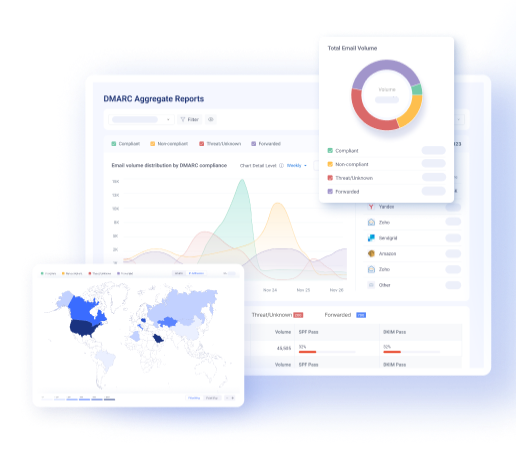

For many organizations, DMARC begins with monitoring. Reports are enabled, data becomes visible, and initial risks are identified. But as email programs mature, visibility alone stops being sufficient.
Security and IT teams often find themselves with DMARC policies still set to p=none, unclear paths to enforcement, and growing pressure from compliance and governance stakeholders. Monitoring shows what’s happening, but it doesn’t define how to safely move forward.
At this stage, organizations need more than dashboards. They need a structured approach to DMARC enforcement that supports policy progression, risk management, and audit readiness. This is where DMARC for enterprise becomes essential, shifting focus from passive observation to controlled enforcement.
EasyDMARC is designed for this transition. It provides a guided path from monitoring to full DMARC enforcement, combining technical controls, enforcement planning, and compliance-ready reporting into a single platform.
This guide explores why reporting alone is not enough, how to recognize when your DMARC program has outgrown basic monitoring, and how EasyDMARC enables organizations to move from visibility to enforced protection with confidence.
When Reporting Is Not Enough
DMARC reporting provides visibility, but visibility alone does not equal protection. Publishing a DMARC record and collecting reports is only the starting point of the enforcement journey. Without a structured remediation and policy strategy, organizations remain exposed even while “monitoring is enabled.”
The most common misconception is that having DMARC reports means DMARC is effectively implemented. In reality, reporting answers what is happening, not what should change next.
Here’s where monitoring-only approaches fall short in several key areas:
- Publishing DMARC is not enforcing DMARC: A policy set to p=none offers insight, not protection. Spoofing risks may still exist, and mailbox providers do not treat non-enforced domains as fully authenticated.
- Unresolved alignment issues persist: Reports may highlight SPF or DKIM failures, but without guided remediation, misaligned senders often remain uncorrected for months or indefinitely.
- Policy progression lacks structure: Moving from p=none to quarantine or reject requires careful planning. Without risk assessment and staged rollout, teams either delay enforcement or avoid it entirely.
- Compliance expectations are unmet: Monitoring dashboards alone do not satisfy audit, governance, or regulatory requirements. Compliance teams need documentation, change history, and evidence of control, not raw data.
- Deliverability risks remain unmanaged: Reporting shows failures, but it does not explain enforcement impact, sender criticality, or business risk tied to policy changes.
As DMARC maturity increases, the focus must shift from identifying issues to controlling outcomes. Effective DMARC programs require policy ownership, enforcement planning, and documented decision-making, not just visibility.
This is why organizations moving toward enterprise-grade email security outgrow reporting-first tools. At higher maturity levels, DMARC becomes a governance and enforcement discipline, not a dashboard exercise.
Signs You May Need a DMARC Alternative
As DMARC programs mature, limitations become harder to ignore. What once worked for visibility no longer supports enforcement, governance, or compliance goals. These friction points usually appear gradually, but they are clear indicators that a monitoring-only approach is no longer sufficient.
Common signs include:
- DMARC remains stuck at p=none: Reports are reviewed, but enforcement never progresses. Without a defined path forward, monitoring becomes a static exercise rather than a security control.
- Uncertainty around moving to quarantine or reject: Teams lack confidence in enforcement decisions due to unclear sender ownership, incomplete alignment, or fear of disrupting legitimate mail.
- No documented enforcement roadmap: Policy changes happen reactively or not at all. There’s no structured plan outlining remediation steps, risk thresholds, or enforcement milestones.
- Compliance teams request audit artifacts: Security leaders are asked to provide evidence of DMARC controls, policy history, and governance decisions, and monitoring dashboards alone can’t meet those requests.
- Deliverability concerns block enforcement: Legitimate email traffic is critical to business operations, but without impact analysis and gradual rollout strategies, enforcement feels too risky to attempt.
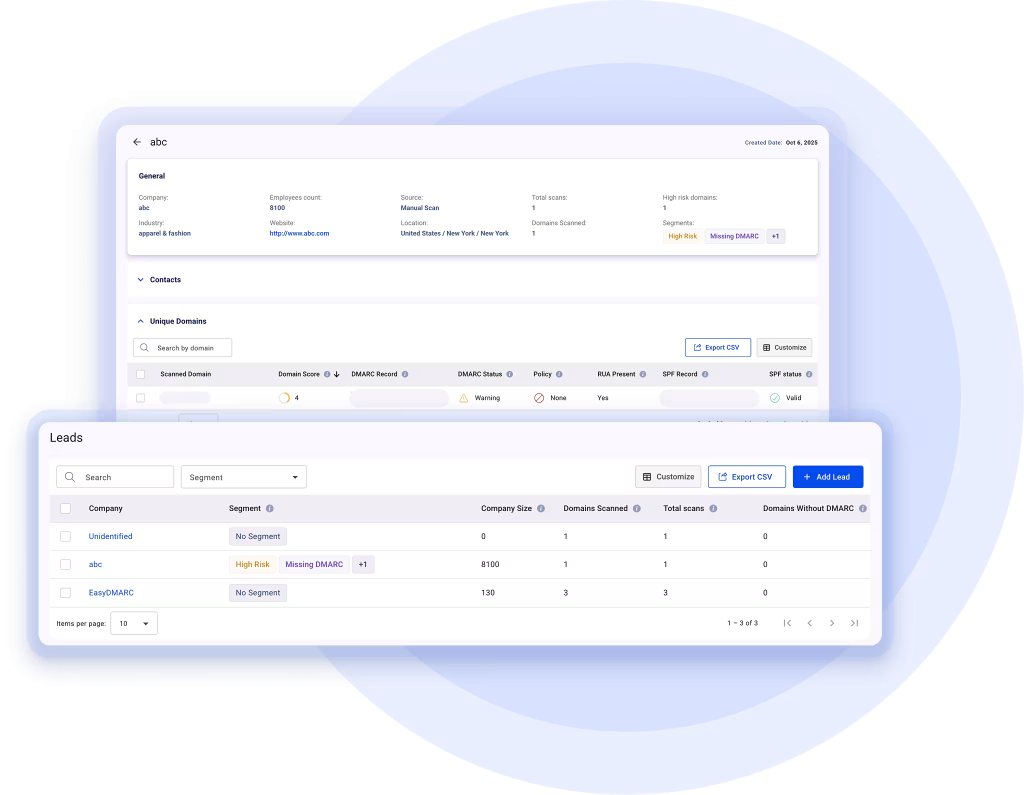
- Complex third-party sender ecosystems: Marketing platforms, CRMs, ticketing systems, and transactional services all send on behalf of the same domain. Managing alignment and accountability across these sources becomes unmanageable without centralized control.
When multiple signs appear at once, it signals that the organization has outgrown basic monitoring. At this point, the challenge isn’t understanding DMARC data, but turning that data into controlled, defensible enforcement.
This is where mature DMARC solutions for business differentiate themselves: by helping teams move forward safely instead of leaving them permanently paused at visibility.
What a Mature DMARC Platform Should Provide
At higher levels of DMARC maturity, reporting alone no longer supports the needs of security, compliance, and leadership teams. A mature DMARC platform must enable enforcement as a controlled, repeatable process rather than a series of isolated configuration changes.
Enforcement Roadmap Planning
Effective enforcement requires a clear and structured plan. A mature platform supports full sending source discovery, guides teams through SPF and DKIM alignment corrections, and helps assess enforcement risk based on sender importance and traffic patterns. This makes it possible to move forward with confidence instead of delaying enforcement due to uncertainty.
Compliance Documentation
As DMARC becomes part of governance and audit discussions, documentation is no longer optional. A mature platform maintains policy change history, generates executive-ready summaries, and provides exportable artifacts that demonstrate control, ownership, and enforcement decisions during audits or compliance reviews.
Deliverability Risk Management
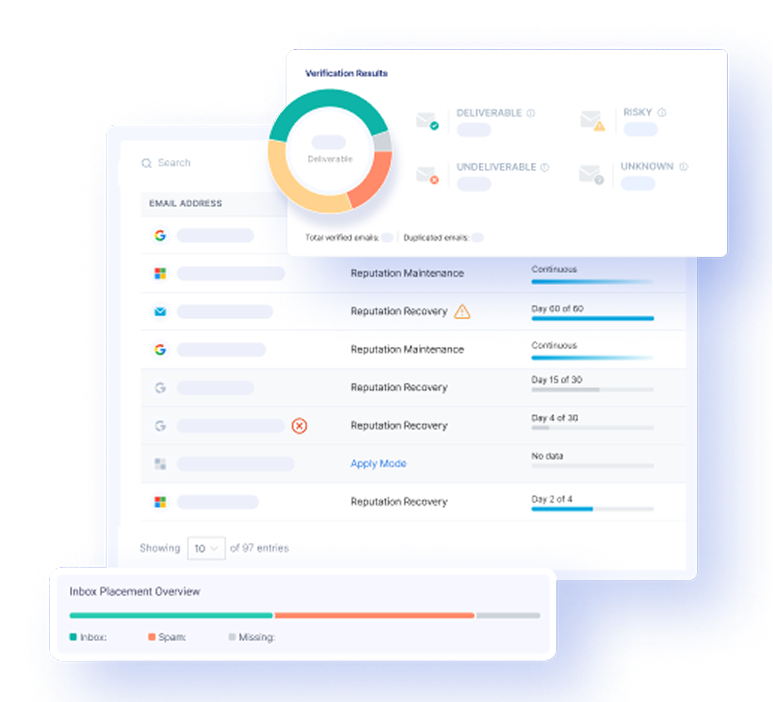
Strong enforcement should never come at the expense of legitimate email delivery. Mature platforms enable gradual policy progression, visibility into alignment impact before enforcement changes, and ongoing review of failures and rejections. This allows organizations to protect their domains while preserving business-critical communication.
Cross-Functional Visibility
DMARC enforcement affects more than security teams alone. A mature platform translates technical authentication data into insights that are relevant for legal, compliance, and executive stakeholders. This shared visibility ensures DMARC functions as an organizational control, not a siloed technical initiative.

EasyDMARC as a Structured Enforcement Alternative
EasyDMARC is built for organizations that have moved beyond basic DMARC visibility and need a clear path to enforcement and compliance readiness. Instead of focusing solely on reporting, it supports the full DMARC lifecycle, from early monitoring to active policy enforcement, with structure and accountability at every stage.
The platform is designed to help teams transition safely from insight to action. Enforcement is guided, not improvised, with clear steps for source validation, alignment correction, and risk-managed policy progression. This reduces uncertainty and enables organizations to advance toward stronger protection without disrupting legitimate email delivery.
EasyDMARC also addresses the operational reality of enterprise environments. Certified DMARC engineers provide hands-on guidance throughout the enforcement process, ensuring technical decisions align with business risk, compliance expectations, and long-term governance goals. Enterprise deployments also involve Customer Success teams who work alongside implementation engineers to support organizations throughout their DMARC enforcement journey. Combined with compliance-ready reporting and audit-friendly documentation, this approach allows organizations to treat DMARC as a managed security control rather than a static configuration.
By connecting visibility, enforcement planning, and governance into a single framework, EasyDMARC enables organizations to move confidently from monitoring to enforced protection. This approach reflects the enforcement journey many customers follow, where gradual policy progression and continuous feedback help teams reach full protection without disrupting legitimate email delivery.
Core Capabilities of EasyDMARC
EasyDMARC is designed to support DMARC as an enforcement and governance process, not just a monitoring function. Each core capability is built to help organizations progress safely toward full enforcement while maintaining deliverability, accountability, and compliance readiness.
Guided Enforcement Model
EasyDMARC provides a structured path from monitoring to active enforcement. Organizations can progress from p=none to quarantine and ultimately reject through a controlled rollout that prioritizes risk mitigation. Enforcement decisions are based on validated sending sources and real traffic impact, reducing the risk of unintended disruption.
Advanced SPF and DKIM Controls
Proper alignment is critical to enforcement success. EasyDMARC helps teams validate SPF and DKIM alignment across all sending sources and supports SPF flattening to avoid DNS lookup limits. These controls ensure authentication is technically sound before policies are tightened.
Compliance Ready Reporting
Enforcement efforts must be defensible. EasyDMARC generates exportable reports that document policy changes, authentication results, and enforcement milestones. This enables organizations to meet audit, governance, and regulatory requirements without relying on manual evidence collection.
Real Time Threat Visibility
Authentication failures are mapped directly to sending sources, providing clear visibility into misconfigured or unauthorized activity. This allows security teams to identify threats quickly and take corrective action before enforcement policies impact legitimate traffic.
Expert Implementation Support
EasyDMARC pairs its platform with hands-on guidance from certified DMARC engineers. This expert support helps organizations plan enforcement strategies, validate changes, and align technical implementation with business risk and compliance objectives.
Who Should Consider Switching?
Not every organization needs to move beyond basic DMARC monitoring immediately. But for teams facing growing security, compliance, or operational pressure, remaining in a monitoring-only state can introduce risk rather than reduce it.
EasyDMARC is well suited for organizations preparing for stricter mailbox provider enforcement, where passive visibility is no longer enough to protect domains from spoofing and impersonation. As expectations around authentication harden, enforcement readiness becomes a requirement rather than a best practice.
Enterprises operating under regulatory or compliance pressure also benefit from a structured enforcement approach. When audit teams request proof of control, policy history, or enforcement rationale, monitoring dashboards alone are rarely sufficient. EasyDMARC supports compliance readiness by turning DMARC into a documented, governable process.
Organizations transitioning from passive monitoring to active protection are another strong fit. For teams that understand their DMARC data but lack a clear roadmap to enforcement, EasyDMARC provides the structure needed to progress safely without disrupting legitimate email traffic.
Finally, security leaders accountable for audit readiness and domain protection often require centralized visibility and expert guidance. EasyDMARC enables these teams to demonstrate ownership, reduce enforcement risk, and align DMARC strategy with broader security and governance objectives.

From Monitoring to Enforced Protection
Monitoring is only the first stage of DMARC maturity. Real protection begins when organizations can safely enforce policies, manage risk, and document decisions for security and compliance stakeholders.
EasyDMARC supports this shift by turning DMARC into a structured enforcement process. With guided policy progression, compliance-ready reporting, and expert support, organizations can move from visibility to enforced protection without compromising deliverability or audit readiness.
For teams ready to go beyond dashboards, structured enforcement is the next step.

 We’re glad you joined EasyDMARC newsletter! Get ready for valuable email security knowledge every week.
 You’re already subscribed to EasyDMARC newsletter. Continue learning more about email security with us


