
Email is where most cyberattacks begin, and for MSPs, that risk is doubled. You are responsible not only for your own email systems, but also for the email environments of every client you manage. One phishing email, one spoofed domain, or one compromised mailbox can quickly turn into a client-wide incident.
That is why email security for MSPs is no longer optional. Attackers actively target MSPs because a single successful email attack can open doors to multiple client networks. Protecting email helps MSPs prevent account takeovers, stop impersonation attacks, and keep client trust intact. This blog explains why email security matters for MSPs, where the biggest risks come from, and how to secure both internal and client email systems effectively.
What Is MSP Email Security?
MSP email security is about protecting the email systems you manage for your clients, as well as your own internal email. Unlike single-organization setups, MSPs manage multiple domains, users, and email environments simultaneously. Each client has different configurations, permissions, and risk levels, yet all of them rely on email as a core business communication channel.
This creates a messy, spread-out attack surface. One poorly secured mailbox, one missed phishing email, or one misconfigured setting can quickly turn into a bigger issue. Manual checks and basic spam filters are not enough at this scale. MSPs need visibility across all client email environments and controls that work consistently without constant babysitting.
That is why email security for MSP setups has to be built into daily operations. It is not just about blocking spam; it is about staying in control while managing many client email systems at once.
Why MSPs Are Prime Targets for Email-Based Attacks
Attackers increasingly use email as their entry point when targeting MSPs. One successful phishing or impersonation attempt can give them access to technicians’ inboxes, shared tools, or client-facing communications. From there, damage can spread quickly.
MSPs are attractive email targets because:
- MSP email accounts often have higher access than regular user inboxes.
- A compromised technician’s email can be used to send trusted emails to multiple clients.
- Weak or reused passwords make account takeovers easier.
- Missing or misconfigured email authentication lets attackers spoof MSP or client domains.
- Shared mailboxes and delegated access make it easier for attackers to move unnoticed.
- Legacy or lightly monitored client email setups are easier to exploit.
Main Email Security Challenges Faced by MSPs
As MSPs deal with multiple tenants, visibility gaps, misconfigurations, and delayed threat detection are very likely. Here are the main risks that make email security for MSP a must-have, and not an optional add-on:
Get EasyDMARC’s smart and automated email authentication platform
For You and Your MSP Clients
Risks from Remote Access and Shared Client Networks
MSPs depend a lot on remote access to manage client email systems, and that automatically raises the risk if credentials get compromised. One stolen mailbox password is often enough to reset access to admin panels, ticketing systems, or cloud dashboards that are tied to email.
If email access is not properly segmented, attackers can quietly move from one setup to another without raising any red flags. Once that first inbox is compromised, containing the damage becomes much harder.
Misconfigured Email Authentication Settings
For MSPs, email authentication should always start with their own systems and then extend to client environments. If your internal email is not properly authenticated, attackers can easily impersonate your domain and target your clients using trusted-looking emails.
Across client setups, SPF, DKIM, and DMARC configurations often differ. Some domains miss sending sources in the SPF record, use outdated DKIM keys, or keep DMARC policies too relaxed. These gaps allow domain spoofing, phishing, and BEC attacks to slip through. They can also cause legitimate emails to fail and land in spam.
MSPs should regularly review email authentication for themselves and their clients. Using an SPF record lookup tool, a DKIM record analyzer, and a DMARC record checker helps quickly identify misconfigurations and early signs of email abuse before issues escalate.
High Volume of Phishing and Impersonation Attempts
MSPs and their clients receive a constant stream of phishing emails that mimic vendors, internal teams, or executives. Attackers adapt quickly, using realistic language and timing to avoid detection. Traditional filters struggle with these targeted attacks, especially when emails come from compromised but legitimate accounts. Over time, repeated exposure increases the chance of user error, making email one of the most persistent risks for MSPs and their clients.
Why Every MSP Must Use Strong Email Security Internally
Before protecting client environments, MSPs must secure their own email systems. Internal email is often where attackers start because MSP inboxes carry authority and access. If a technician or admin mailbox is compromised, attackers can impersonate staff, send trusted instructions to clients, or reset access to connected tools. This makes email security for MSP operations a foundational requirement, not an add-on. Strong internal email security reduces the risk of account takeovers, limits lateral movement, and prevents attackers from using the MSP’s identity as an attack vector against clients.
Core Email Security Features Every MSP Should Use
Strong security controls help prevent account misuse and stop attackers from using MSP inboxes to target clients.
Core email security features every MSP should use include:
- Phishing link detection to block deceptive emails early.
- Email authentication using SPF, DKIM, and DMARC to prevent domain spoofing.
- Malicious link and attachment analysis to stop malware delivery.
- Account takeover monitoring to detect suspicious login activity.
- Centralized logging and alerting for faster visibility across mailboxes.
When these controls are in place, it gets much easier to extend the same protections to client environments without introducing new risks or blind spots.
Benefits of Email Security for MSPs and Their Clients
Strong email security benefits both MSPs and their clients. It reduces risk, improves daily operations, and builds long-term trust.
Reduced Risk of Phishing and Account Takeovers
Email security helps block phishing, spoofed emails, and malicious links before they reach user inboxes. This lowers the chances of credential theft and account takeovers, which are often the starting point for larger incidents. For MSPs, fewer compromised inboxes mean fewer emergency responses and less time spent on cleanup. For clients, it means safer communication and fewer disruptions to business operations.
Better Protection Against Impersonation and BEC Attacks
With proper email authentication and monitoring in place, attackers find it much harder to impersonate executives, vendors, or MSP staff. This directly reduces the risk of business email compromise, fake invoice scams, and payment fraud.
Improved Email Deliverability and Reliability
Email security is not just about blocking threats. When SPF, DKIM, and DMARC are correctly configured, legitimate emails are more likely to land in inboxes instead of spam folders. This improves day-to-day communication for clients and reduces delivery complaints. MSPs also spend less time troubleshooting email issues caused by misconfigurations or blocklisting.
Stronger Trust and Long-Term Client Retention
Consistent email security reduces incidents, builds confidence, and shows proactive risk management. Over time, this strengthens trust, improves client satisfaction, and supports long-term relationships built on reliability rather than reactive fixes.
Practical Tips to Improve Email Security for MSP Clients
Improving email security for MSP clients does not always require complex changes. The focus should be on reducing exposure, improving visibility, and applying consistent controls across all client environments. Two practical steps make a noticeable difference when implemented correctly.
Using Advanced Email Security Platforms
Advanced email security platforms help MSPs catch threats that simple spam filters usually miss. They look at how an email is sent, what it contains, and where links or attachments lead. This makes them much better at stopping phishing, impersonation, and account takeover attempts.
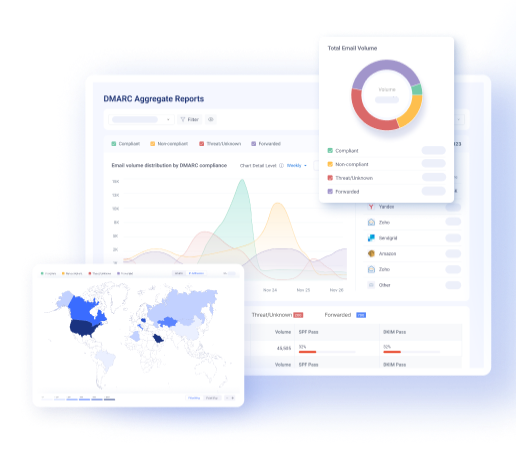
Most platforms also give MSPs a single dashboard to watch activity across all client domains. This makes it easier to notice unusual patterns early and act before things get worse. Automation helps too, as it cuts down manual work and reduces the chance of small mistakes across client inboxes.
Moving Email Systems to the Cloud
Cloud-based email systems are generally easier to secure than older on-premise setups. They come with built-in protections, regular updates, and better support for modern authentication methods.
For MSPs, cloud email is simpler to manage across multiple clients and easier to scale as needs change. It also works well with advanced email security tools, giving better visibility and control. Moving away from outdated email servers reduces maintenance effort and lowers the risk that comes with unpatched or poorly monitored systems.
How MSPs Should Communicate Email Security to Clients
When it comes to email security, how MSPs explain it to clients matters as much as the tools themselves. Most clients do not need technical details. They need to understand risk, impact, and why certain controls are necessary.
Start by explaining email security in practical terms. Instead of talking about protocols and settings, focus on what can go wrong. Phishing emails, fake invoices, and account takeovers are easy for clients to relate to because they see them regularly. This helps them understand why email security deserves attention and budget.
It also helps to clearly separate prevention from reaction. Clients should know that email security is designed to stop problems before they reach inboxes, not just clean up after an incident. This shifts the conversation from “fixing issues” to “reducing risk.”
Learn More About Email Authentication and DMARC for MSPs
Email authentication helps protect both MSP and client email systems. SPF, DKIM, and DMARC stop domain spoofing, lower phishing risk, and build trust in email across all managed domains. For MSPs, this also creates a clear service opportunity.
EasyDMARC provides a DMARC solution designed for MSPs, making it simple to monitor, manage, and enforce email authentication for multiple clients from one platform. Many MSP partners use DMARC as an added service to reduce support tickets, improve client retention, and generate new revenue without extra complexity. Offering managed DMARC helps MSPs strengthen security, stand out from competitors, and support steady business growth.
Start offering managed DMARC in a simple and scalable way. Partner with EasyDMARC to protect your own domain and your clients’ email, reduce support effort, and build a recurring revenue stream for your MSP.

 We’re glad you joined EasyDMARC newsletter! Get ready for valuable email security knowledge every week.
 You’re already subscribed to EasyDMARC newsletter. Continue learning more about email security with us


