
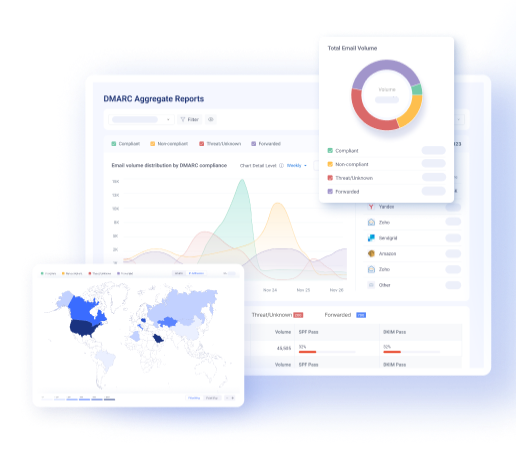
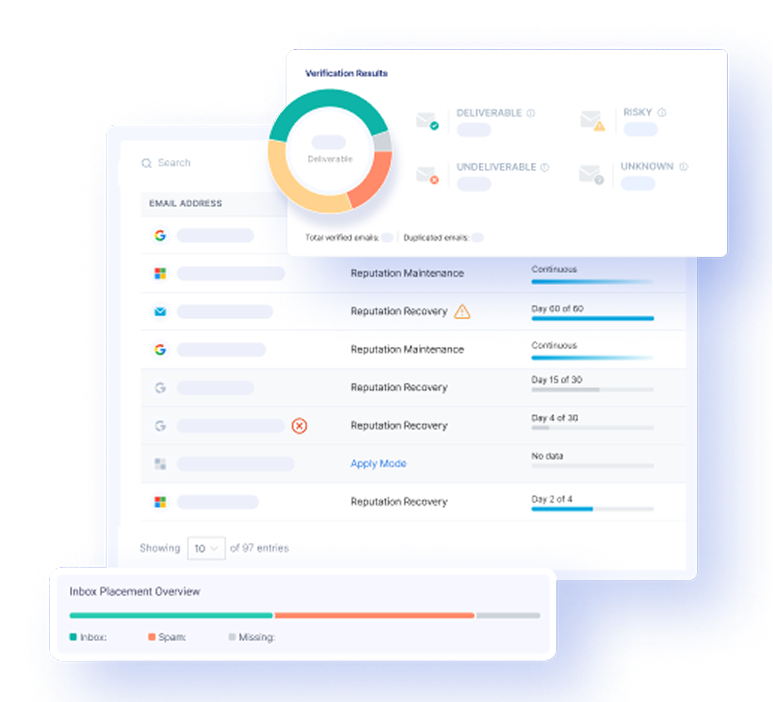
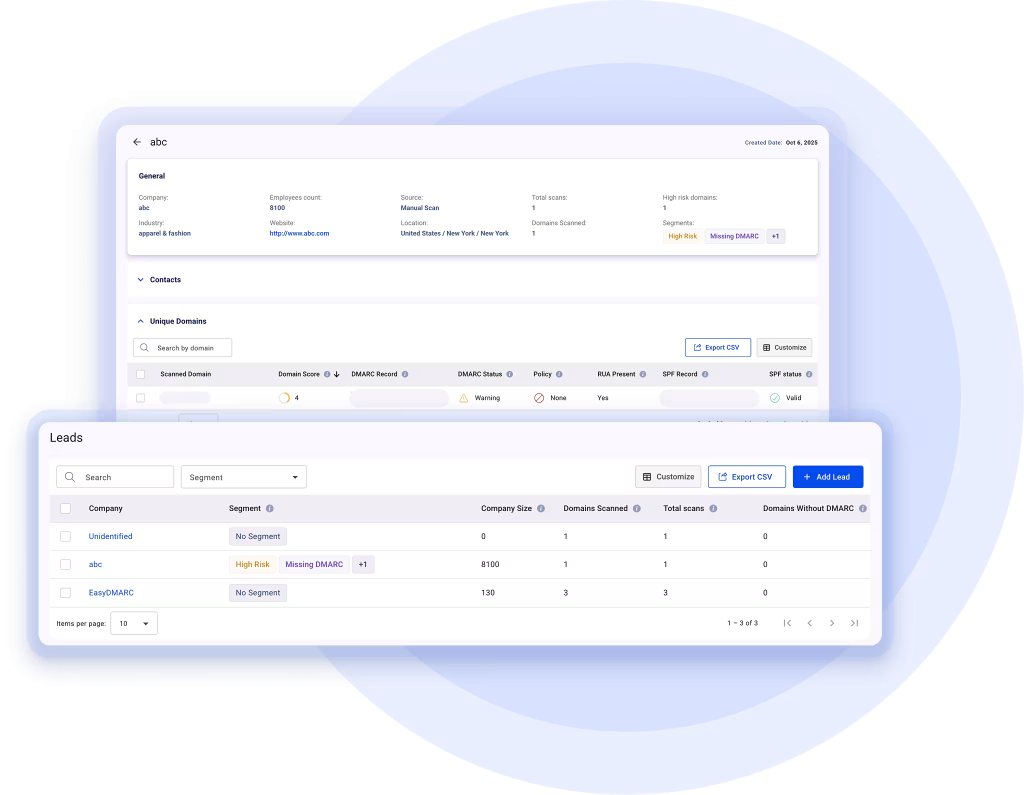
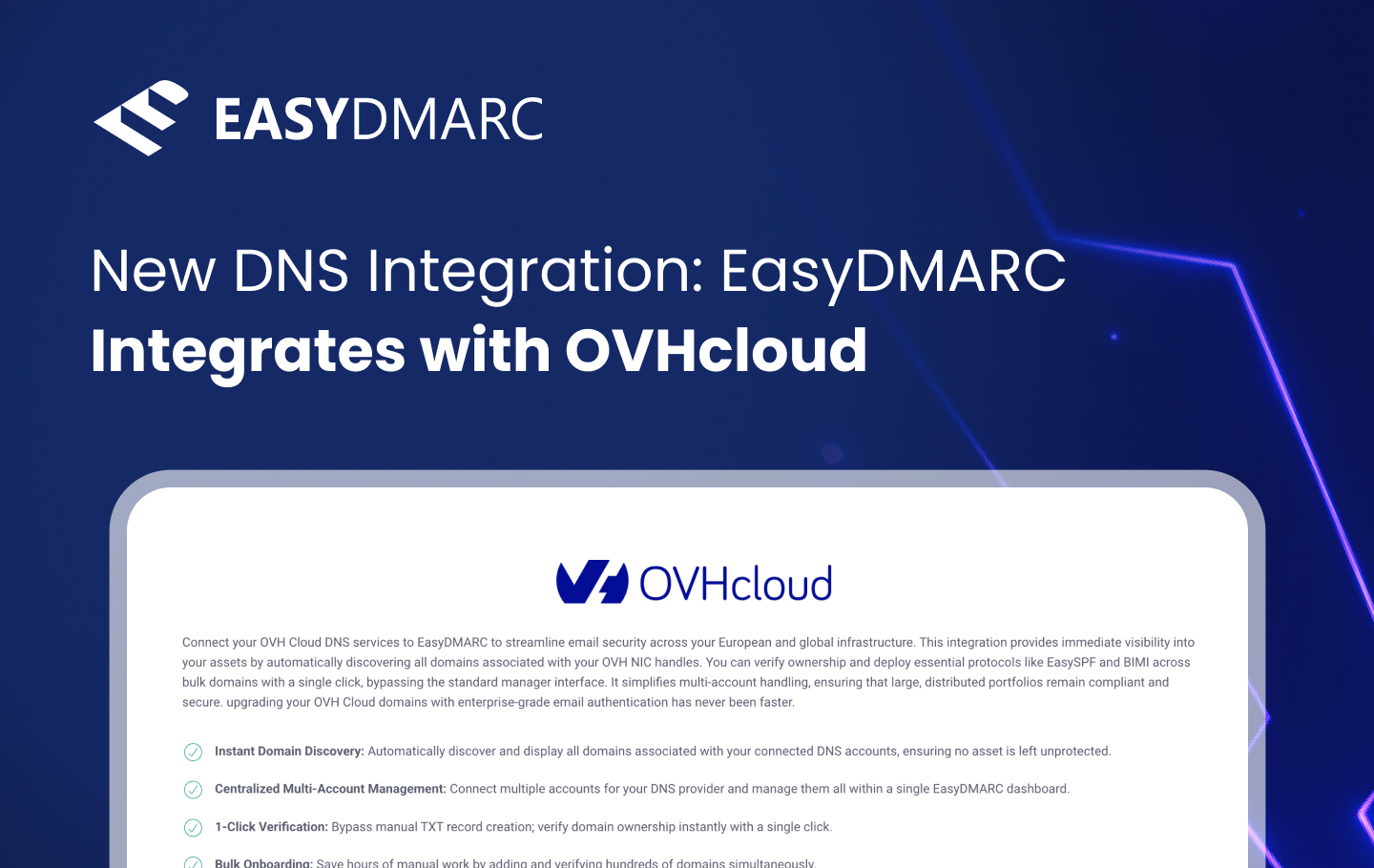
Managing DNS records across hundreds of domains has historically been one of the most time-consuming obstacles to DMARC enforcement. Manual TXT record creation, verification delays, and the need to switch between multiple dashboards create friction that slows down security teams and MSPs alike.
Today, we’re excited to announce that the OVHcloud DNS Integration is now officially available for all EasyDMARC customers. This integration eliminates manual DNS configuration for OVHcloud users, enabling instant domain discovery, one-click verification, and bulk deployment directly from the EasyDMARC dashboard—whether you’re managing your own domains or those of dozens of clients.
What’s New: OVHcloud DNS Integration
The OVHcloud integration joins our growing ecosystem of direct DNS provider connections, alongside Cloudflare, GoDaddy, AWS Route 53, Azure DNS, and Google Cloud. For organizations and service providers managing domains through OVHcloud—one of Europe’s largest cloud and hosting providers—this integration removes significant operational overhead from DMARC implementation.
| Capability | What It Does | Value for Enterprises | Value for MSPs |
| Instant Domain Discovery | Automatically scans and imports all domains associated with your connected OVHcloud account | Eliminates manual domain inventory across business units | Eliminates manual discovery across multiple client accounts |
| Secure API Authentication | Connects using OVH API tokens with scoped permissions | Maintains security posture while enabling automation | Each client connection stays separate; no credential mixing |
| Bulk Select + Add & Verify | Select multiple domains, preview records, then verify all with one click | Full control with bulk efficiency | Scale client onboarding without sacrificing oversight |
| Bulk Onboarding | Adds and verifies hundreds of domains simultaneously | Scales DMARC programs across large domain portfolios | Scales service delivery across entire client base |
| One-Click Managed Solutions | Activates DMARC, EasySPF, and BIMI without logging into OVH | Centralizes email authentication in one place | Centralizes multi-tenant management without client access |
| Automatic Detection | Platform detects OVH-supported domains and offers one-click verify | Reduces cognitive load for security teams | Eliminates manual triage of domain ownership |
Why This Integration Matters: Two Perspectives
For Enterprises
Organizations with OVHcloud-hosted domains previously faced a familiar challenge: each DMARC policy update, SPF modification, or ownership verification required manual DNS changes in the OVH Manager interface. For enterprises managing hundreds of domains, this meant hundreds of manual operations—each introducing potential for syntax errors, misconfigurations, or delays.
Before Integration:
- Security team adds domain → Creates TXT record manually in OVH → Waits for propagation → Verifies → Configures DMARC → Repeats per domain
After Integration:
- Domain discovered automatically → One-click verify → Configure DMARC in bulk → Done
For MSPs
The efficiency gains compound exponentially when multiplied across client accounts. MSPs managing OVHcloud-hosted domains for multiple clients previously faced a fragmented workflow: logging into each client’s OVH account separately, manually creating records, and tracking progress across spreadsheets.
Before Integration:
- Client onboarding → Request OVH access → Manual TXT per domain → Verify → Configure → Billable hours pile up
After Integration:
- Connect once per client → Bulk discover all domains → One-click verify all → Configure across clients from single dashboard → Deliver faster, bill smarter
How It Works: Three Simple Steps
1. Connect Your OVHcloud Account
Navigate to Integrations in your EasyDMARC dashboard and select OVHcloud from the DNS provider list. You’ll be prompted to provide:
- OVHcloud application key
- OVHcloud application secret
- OVHcloud consumer key
For MSPs: Create separate API credentials for each client organization. This maintains clear access boundaries and audit trails per client.
2. Discover Your Domains
Once authenticated, EasyDMARC automatically scans the connected OVHcloud account and displays all associated domains. The platform identifies which domains are already configured for DMARC and which are ready for onboarding.
3. Verify and Deploy
Once your domains are discovered, you’ll see them listed in the EasyDMARC dashboard. From here:
- Select domains – Check the boxes next to the domains you want to add and verify (you can select one, several, or all)
- Review existing records – For each selected domain, the platform shows you:
- Any existing DMARC records already published
- A preview of the new record that will be added
- Click “Add and Verify” – This single action:
- Automatically generates the required DNS record
- Publishes it to your OVHcloud DNS zone via API
- Confirms verification instantly for all selected domains
Once verification is complete, you can enable DMARC, EasySPF, or BIMI for individual domains or in bulk—all without leaving the EasyDMARC interface.
This gives you full visibility and control before any DNS changes are made, ensuring you always know exactly what will be published.
MSP Workflow: Managing Multiple Clients
The OVHcloud integration is designed with multi-tenant operations in mind:
| MSP Task | How Integration Helps |
| Client onboarding | Connect once per client; all domains discovered instantly |
| Domain verification | One-click verify across all client domains in bulk |
| Ongoing management | Update DMARC policies across clients without OVH access |
| Billing efficiency | Reduce per-client setup time from hours to minutes |
| Service expansion | Offer DMARC as a higher-margin managed service |
Technical Specifications
| Detail | Information |
| Supported OVH Services | OVHcloud Web Hosting, VPS, Dedicated Servers, Public Cloud (domains managed via OVH DNS) |
| API Requirements | OVH API tokens with GET/POST/PUT permissions for /domain and /dns records |
| Supported Record Types | TXT (DMARC, SPF, BIMI, verification), CNAME (BIMI selector) |
| MTA-STS Support | Not currently supported via this integration (requires manual configuration) |
| Propagation Timing | Verification is instant; DNS record propagation follows standard OVH timelines |
| Domain Limits | No artificial limits; scales to all domains in connected OVH account |
| Multi-Account Support | Connect unlimited OVH accounts; manage all from single EasyDMARC dashboard |
Getting Started
The OVHcloud DNS Integration is available now to all EasyDMARC customers on Enterprise and MSP plans. To enable it:
- Log in to your EasyDMARC dashboard
- Navigate to Settings → Integrations → DNS Providers
- Select OVHcloud and click Connect
- Follow the prompts to generate and enter your OVH API credentials
- Begin discovering and verifying domains immediately
For detailed setup instructions, including how to generate OVH API tokens with the correct permissions, visit our OVHcloud Integration Documentation.
What’s Next
The OVHcloud integration is part of our continued investment in making DMARC deployment as frictionless as possible for enterprises and service providers. In the coming months, we’ll be adding support for additional DNS providers and expanding our one-click verification capabilities to cover even more deployment scenarios.
Have a DNS provider you’d like to see supported? Let us know at [email protected].
Frequently Asked Questions
No. A single OVH API connection gives visibility into all domains associated with that OVH account.
The integration requires API access to read domain lists and modify DNS records. EasyDMARC requests minimum necessary permissions and never accesses other OVH services.
Create separate OVH API credentials for each client organization. Connect each to EasyDMARC as a distinct integration. This maintains clear access boundaries, separate audit trails, and clean client separation.
Yes. API authentication operates separately from console 2FA. Generate API tokens directly within the client’s OVH account with appropriate permissions.
Disconnecting removes EasyDMARC’s ability to modify DNS records in that client’s OVH account. Existing DMARC records remain published; you simply lose update capability.
Yes. The integration works with all OVHcloud regions and data centers.

 We’re glad you joined EasyDMARC newsletter! Get ready for valuable email security knowledge every week.
 You’re already subscribed to EasyDMARC newsletter. Continue learning more about email security with us


